/ The Work of Designer - Baz Pringle
3D Production
Graphic Design
Illustration

3D Production
Graphic Design
Illustration
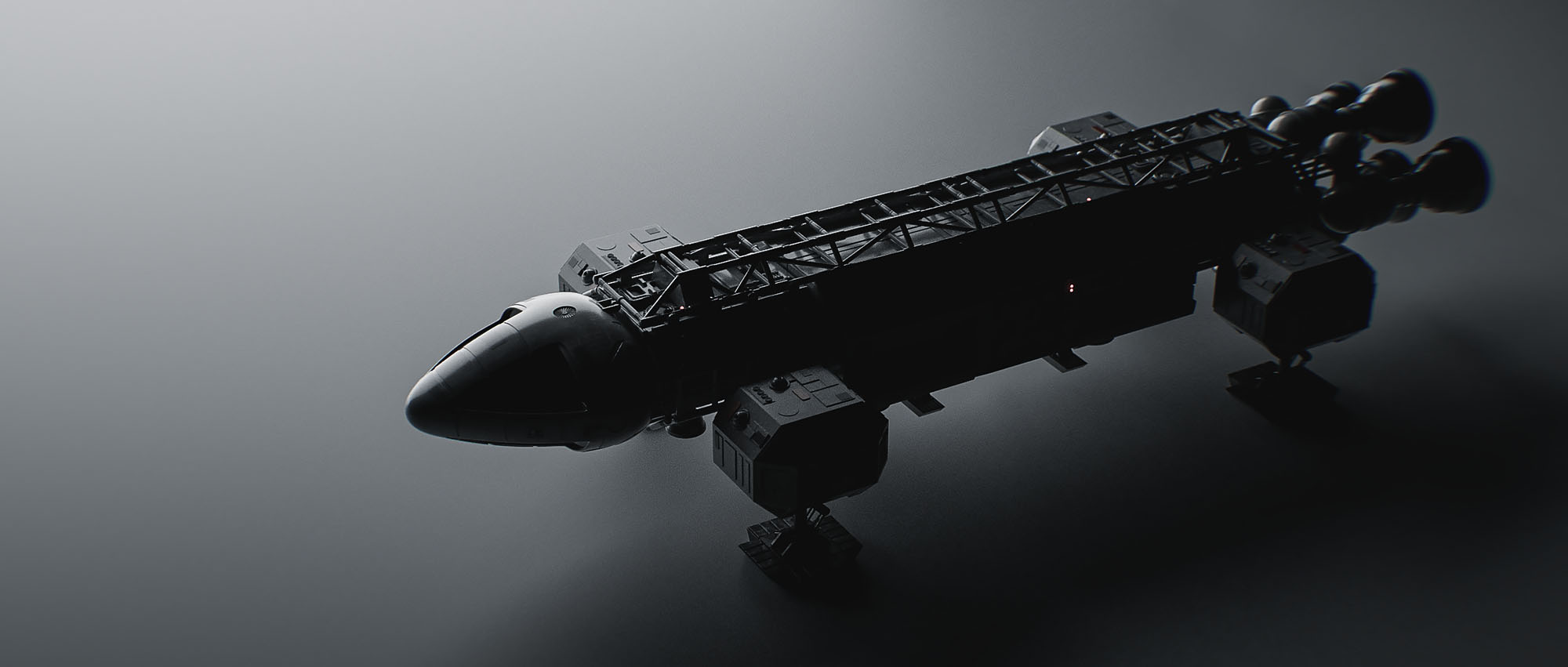
An archival look-development and design study paying homage to the legendary British science-fiction television series Space: 1999, originally created by Gerry and Sylvia Anderson. The show’s mid-century retro-futurism and brutalist industrial aesthetics have served as a foundational influence throughout my career in visual design.
This retrospective portfolio project revisits the iconic Eagle Transporter, reinterpreting Brian Johnson’s classic spacecraft design through modern production pipelines. By balancing structural authenticity with contemporary digital workflows, the collection explores the timeless silhouette across a comprehensive series of high-fidelity 3D assets and typographical layouts.
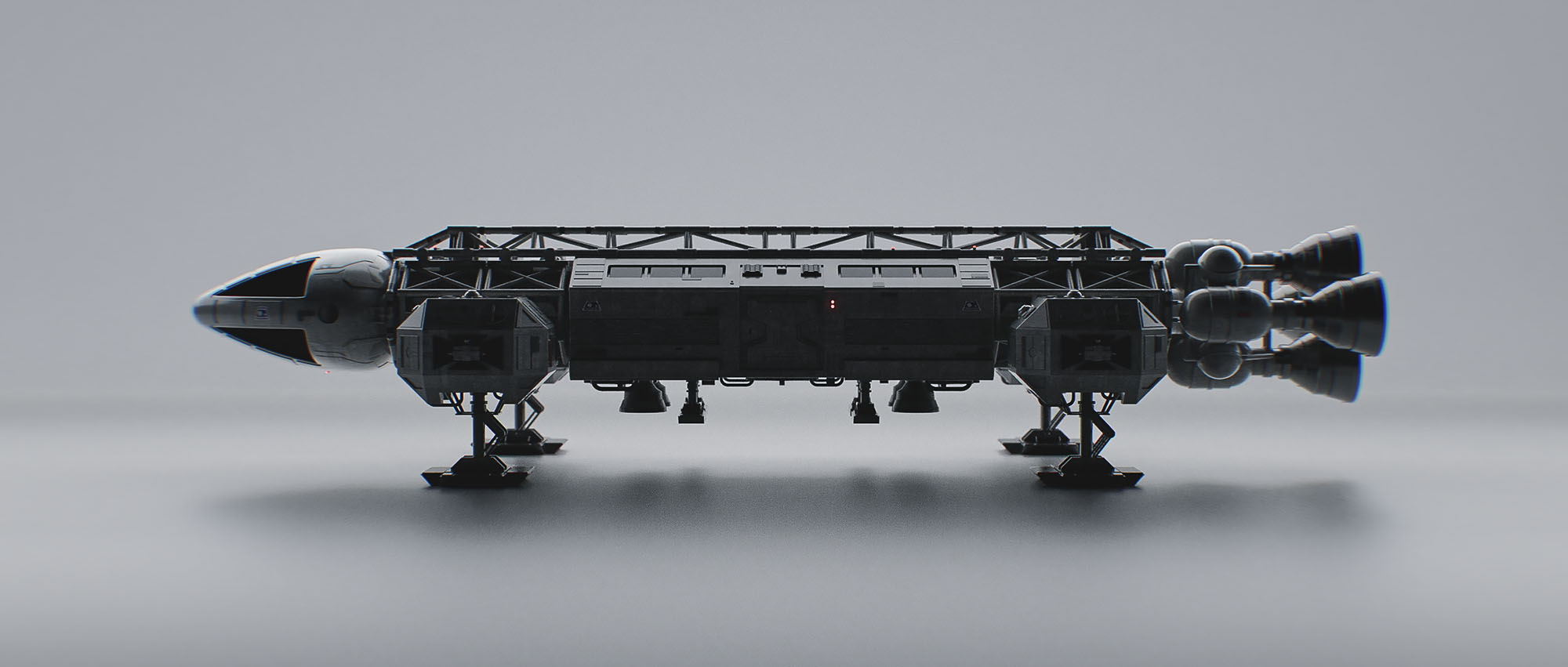
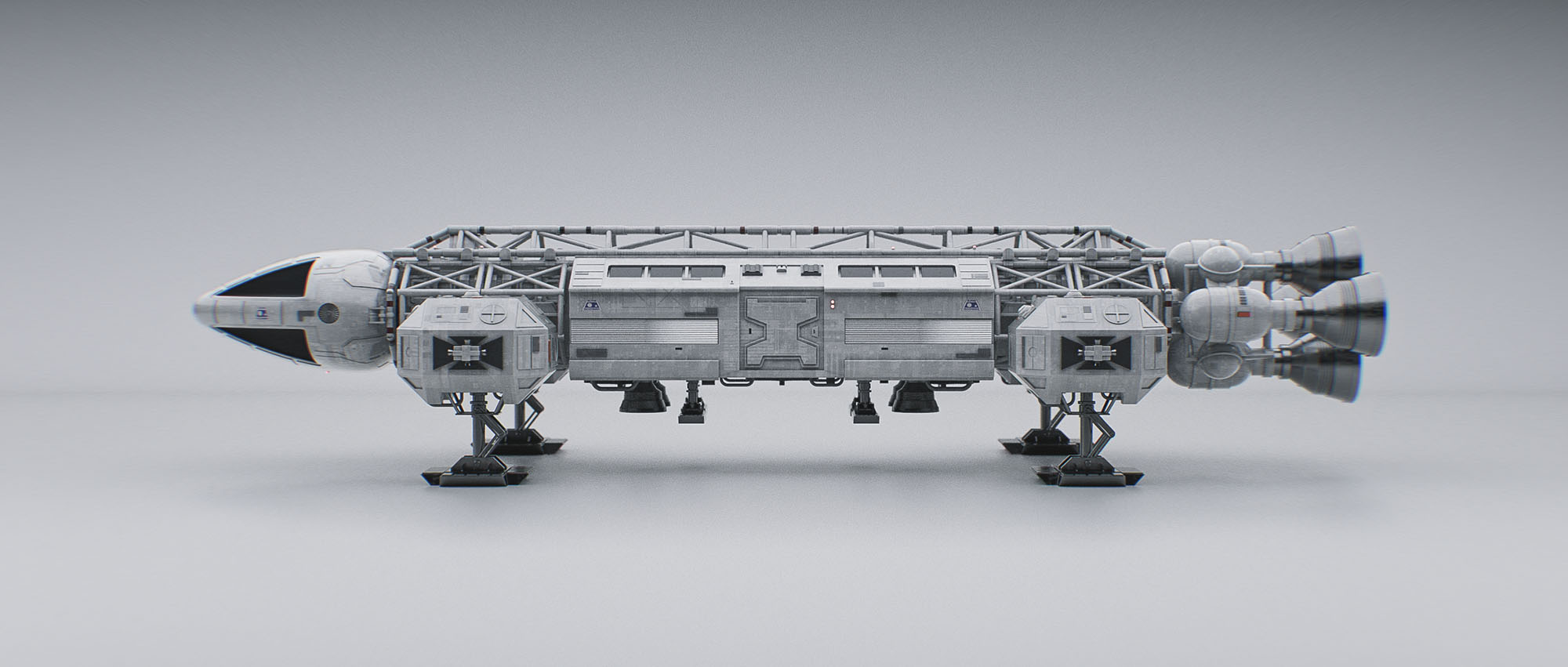
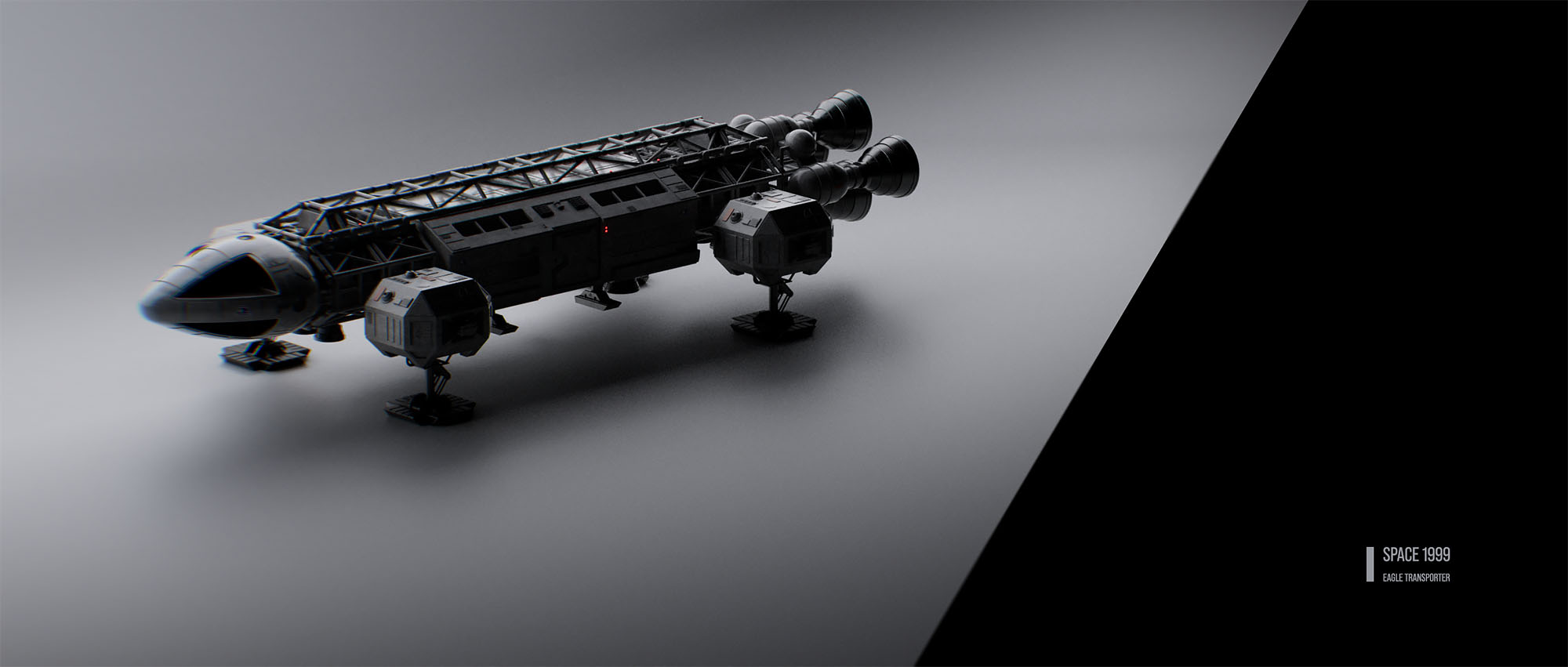
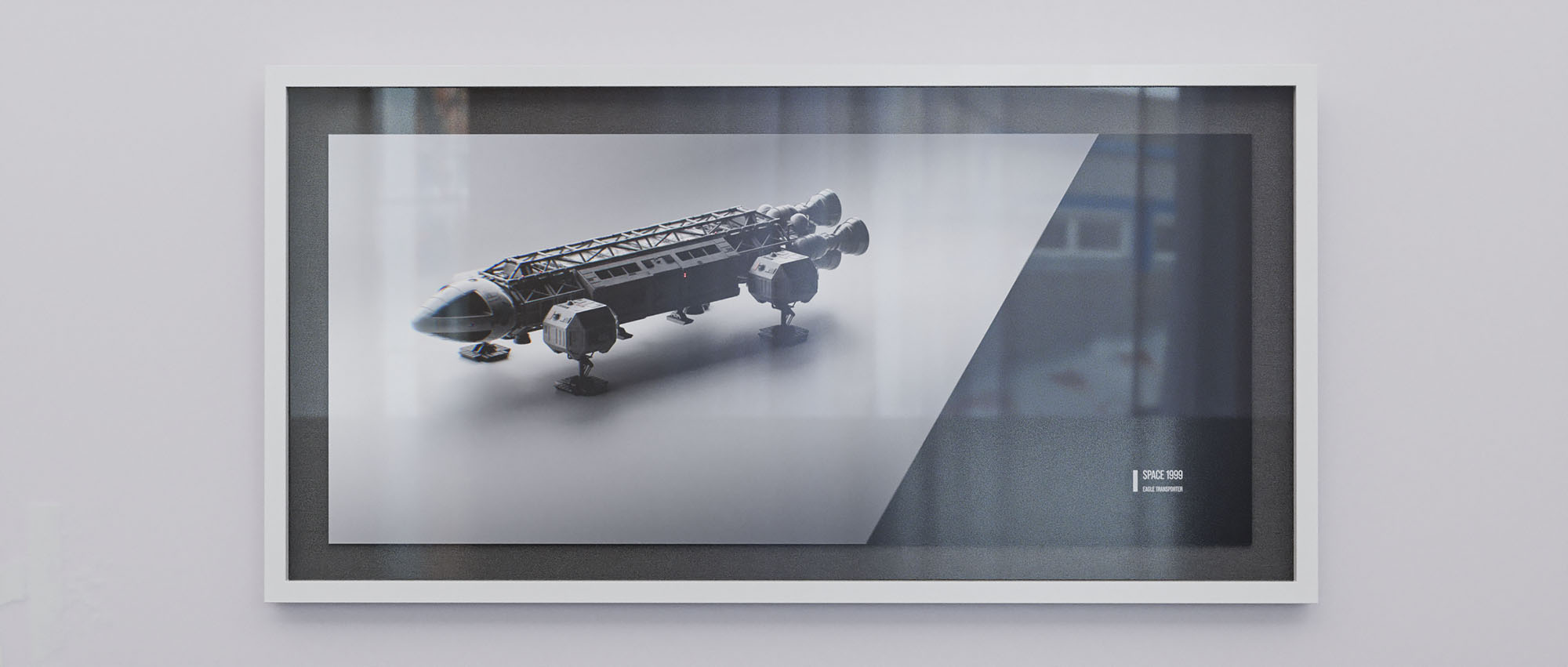
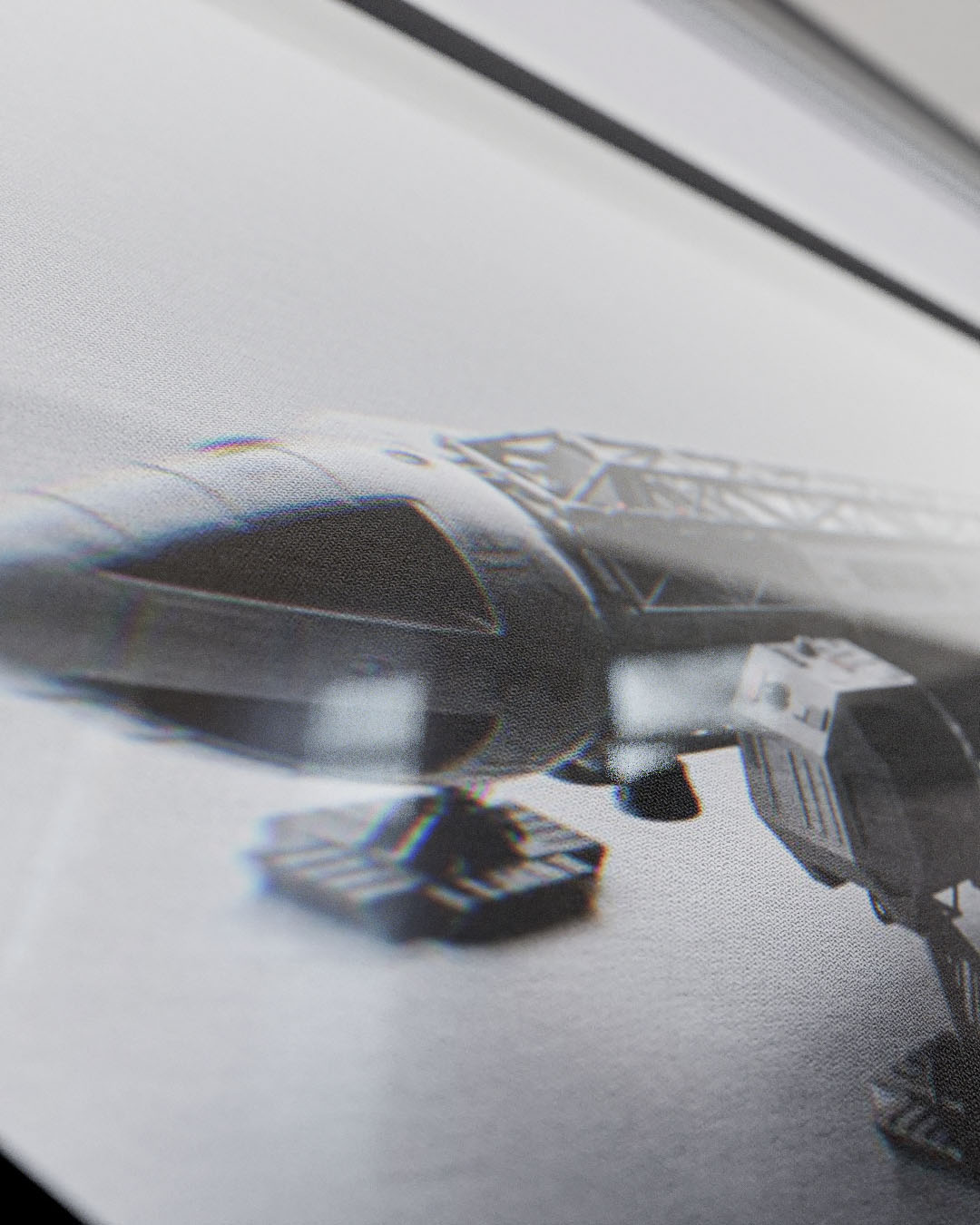
This section showcases the transition of the collection’s digital imagery into a physical, wide-format gallery canvas presentation. Designed to emphasise the sweeping cinematic lines of the Eagle Transporter, this landscape piece anchors the vehicle’s form within a stark, asymmetric presentation layout ready for framing.
The composition splits the panoramic canvas into distinct focus areas, letting a clean, high-contrast angle of the 3D model breathe against a soft gradient background. A sharp angular divide transitions into a dark negative space on the right, punctuated by minimalist typographic alignment, resulting in a presentation that serves as a focal point for the series.
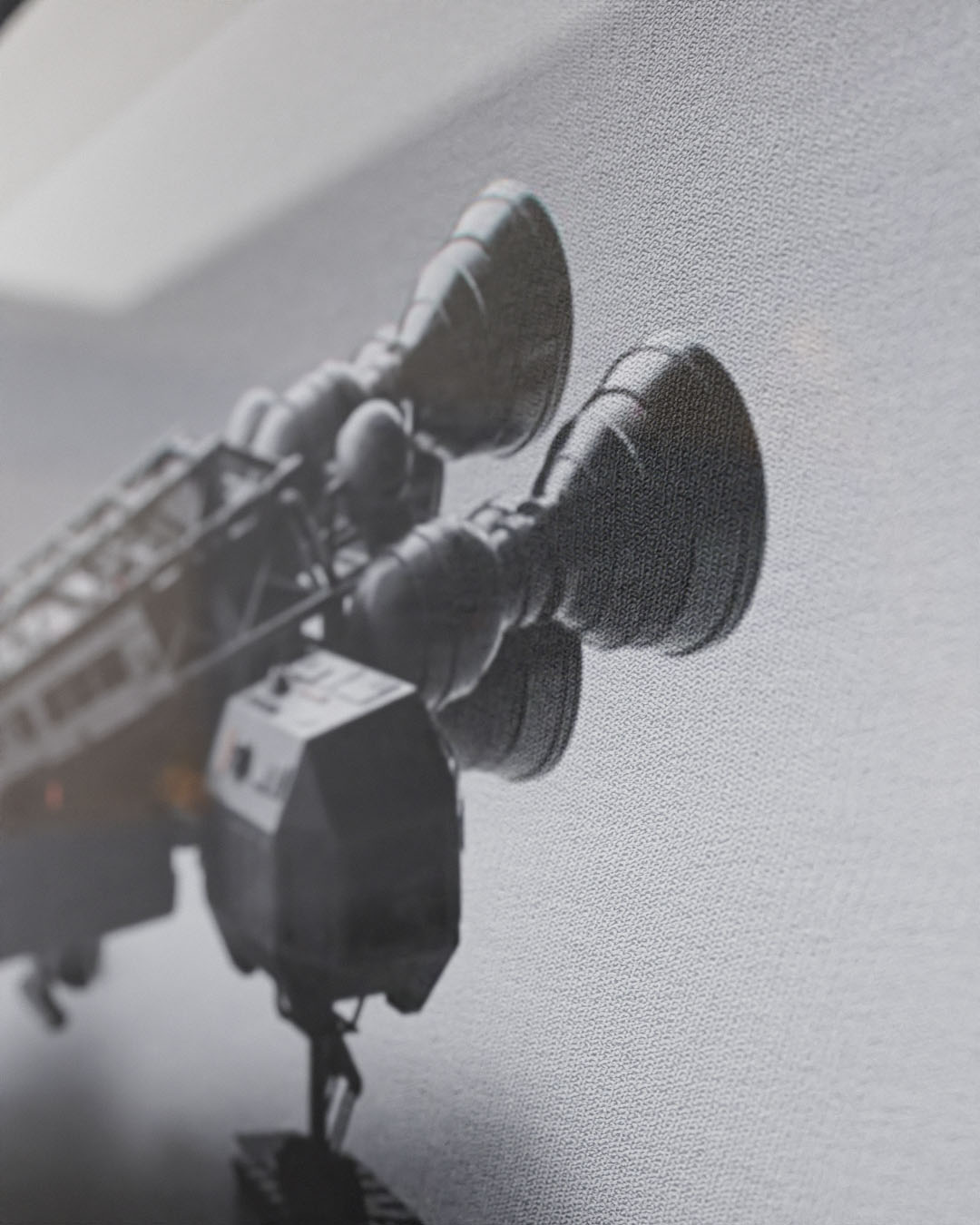
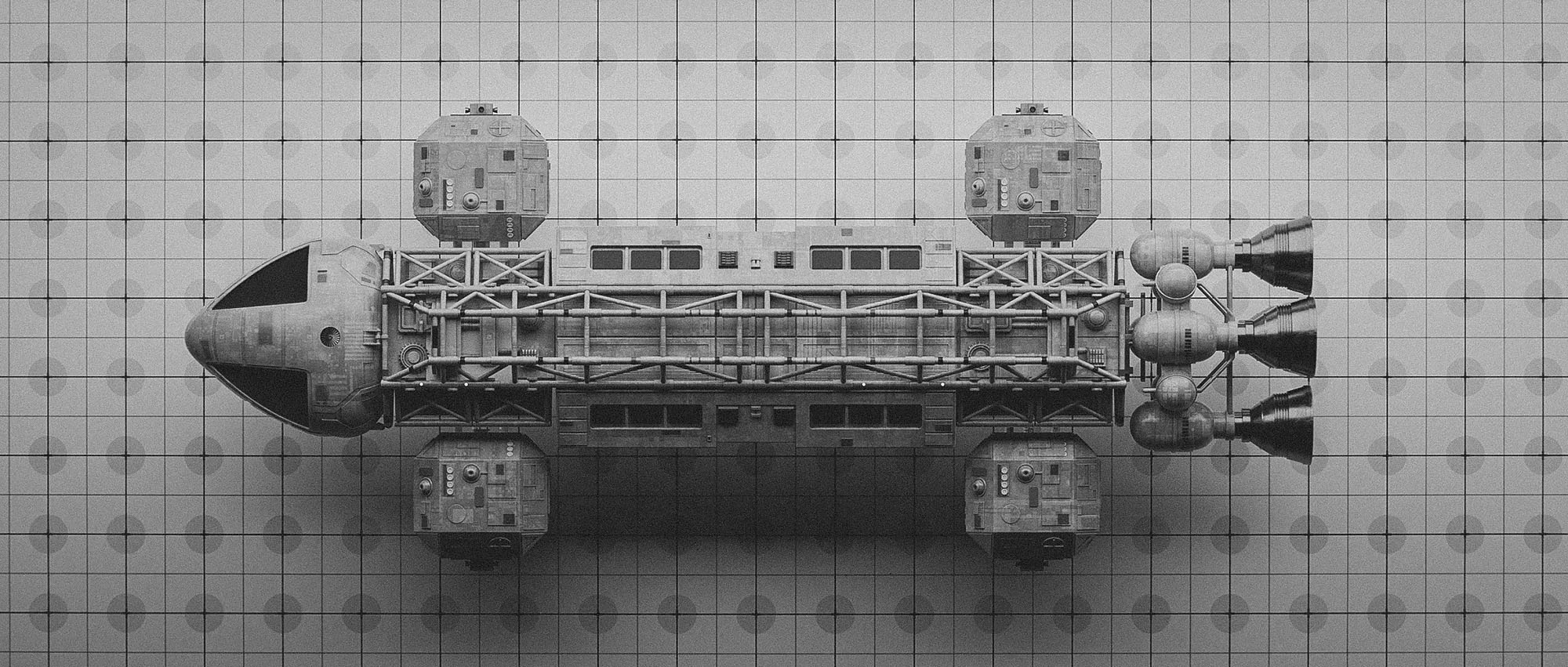
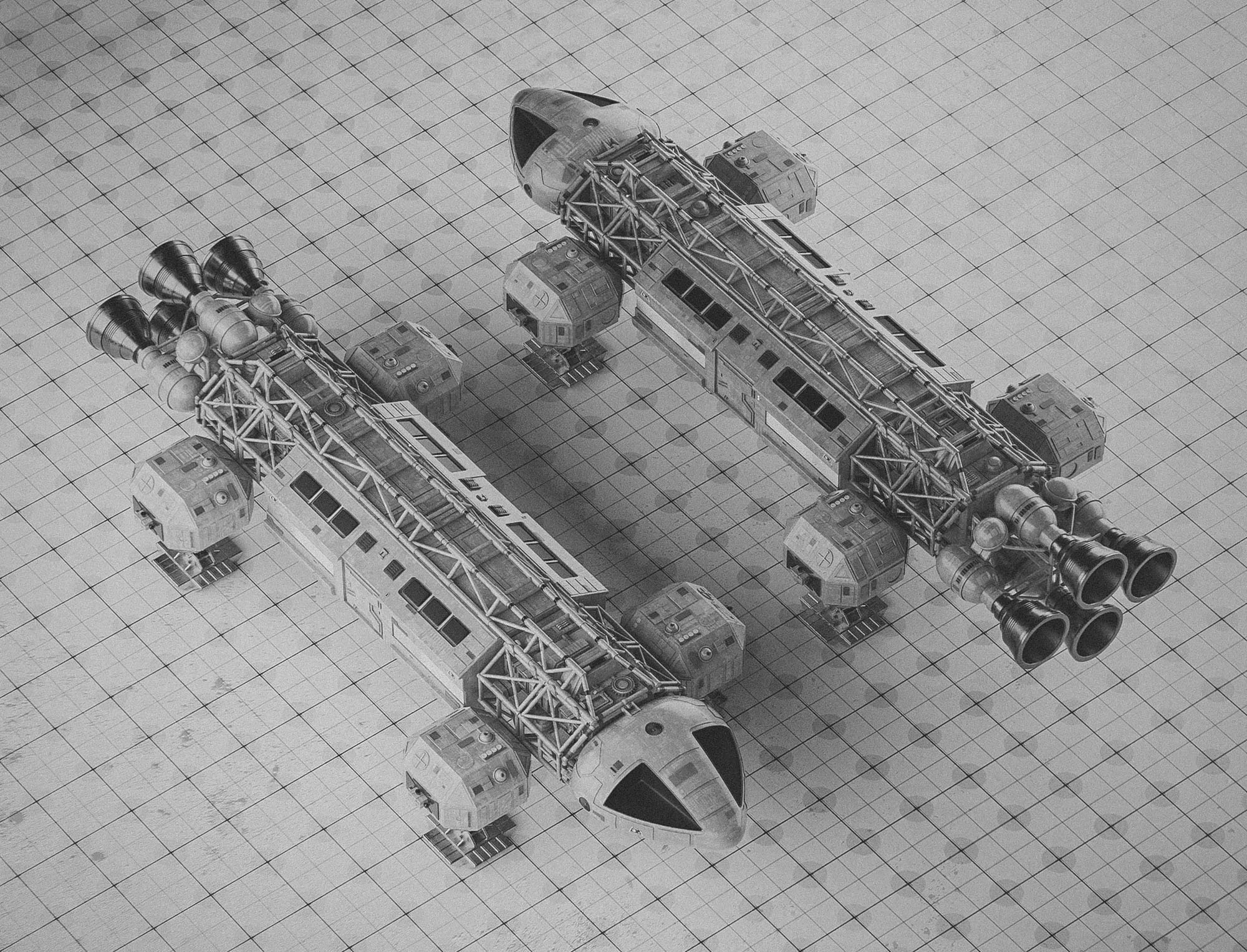
This study steps away from polished digital rendering to recreate the look of vintage production photography and behind-the-scenes archival imagery. The goal was to mimic the physical characteristics of 1970s studio photography, styling the scene to look like an authentic snapshot of the miniature filming models resting on a design studio floor.
To achieve this specific retro texture, the render pipeline utilizes an isometric-style camera, pairing it with a high-contrast monochromatic treatment. By layering realistic film grain, subtle lens distortion, paper-stock textures, and fine surface smudges over a technical gridded floor mat, the composition captures the tactile imperfection of historical practical effects workshops.
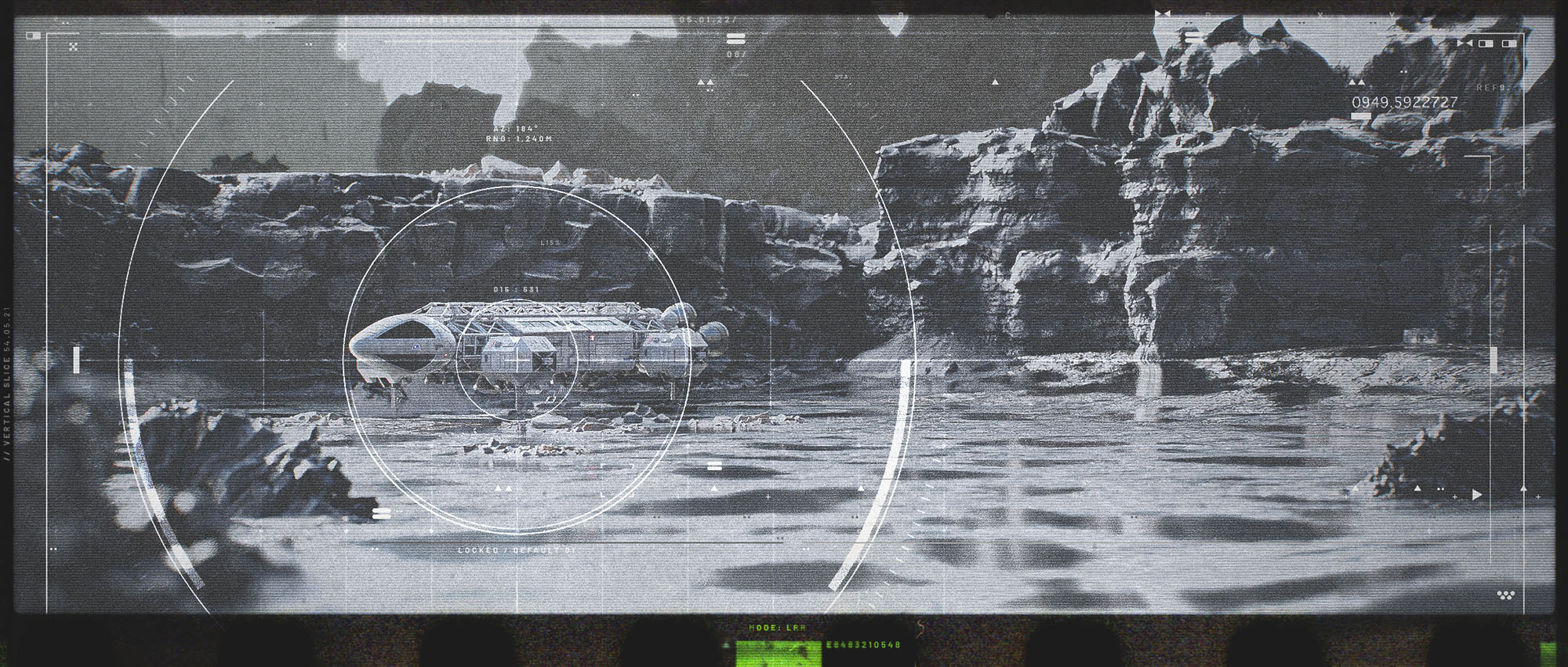
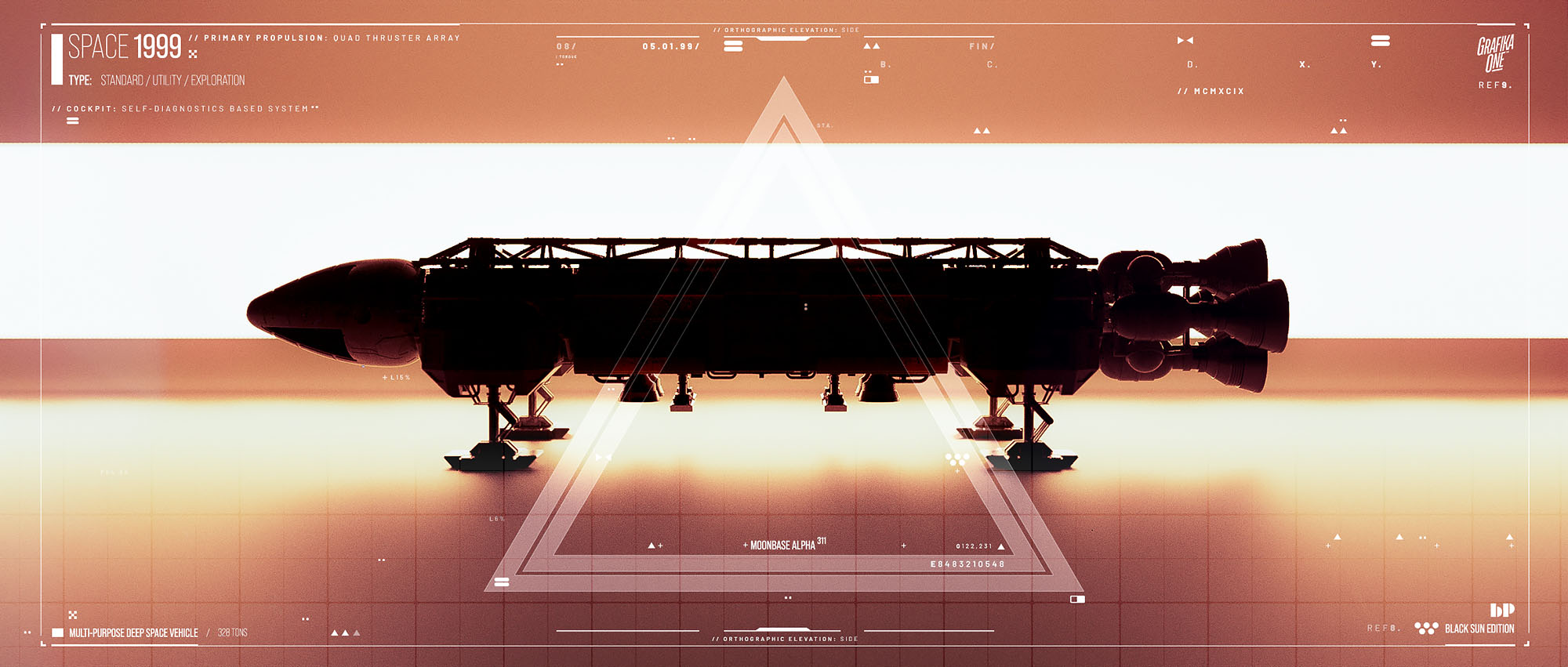
The two pieces above look at how sci-fi interface overlays can complement the mood of a 3D scene, bringing together cinematic environment renders and technical design. By adding intricate graphic telemetry, these layouts make the imagery feel like it belongs to a functional story—simulating in-universe tracking monitors, diagnostic heads-up displays, and tactical flight decks.
The layouts mix fine vector lines, targeting reticles, and data readouts with rugged landscapes and bold blocks of colour. This combination shows off the two core focuses of the collection: keeping the ship’s structure authentic while adding contemporary screen graphics and military-style HUD elements.
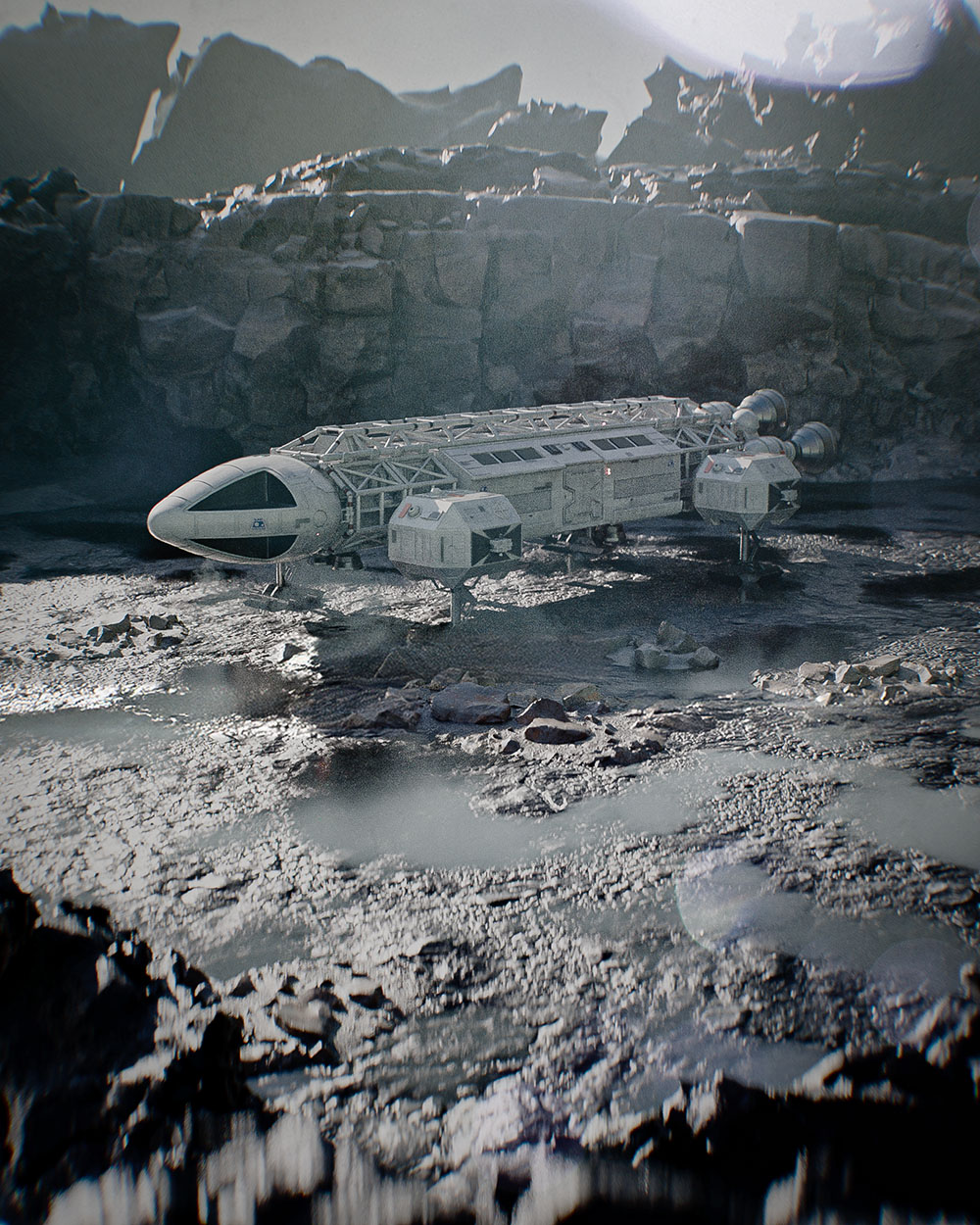
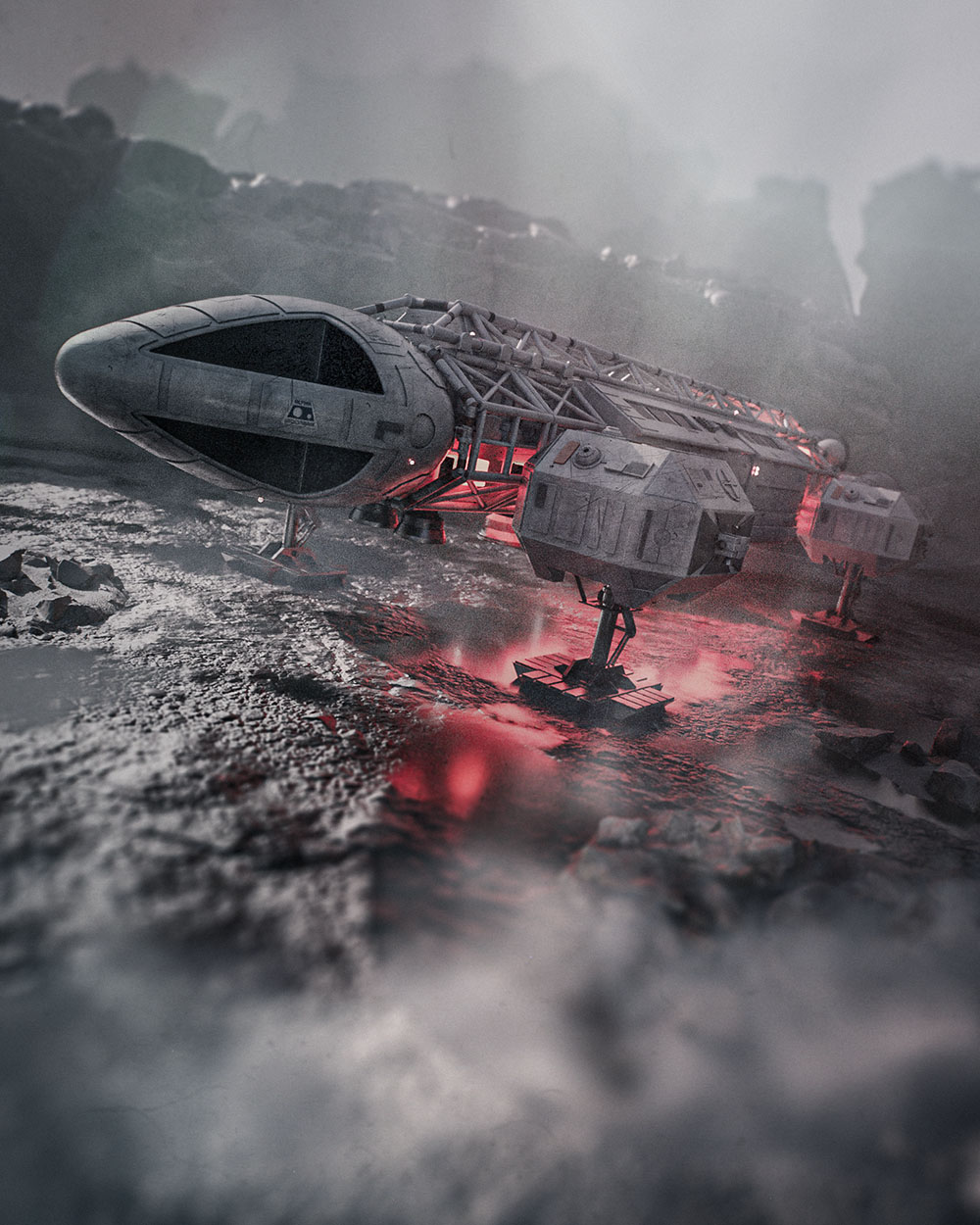
A pair of environmental rendering studies that explore a more traditional 3D illustrative approach. Moving away from the abstract layouts and technical schemas, these frames focus on world-building and narrative context, embedding the Eagle Transporter into a pair of hostile, realistic landscapes.
The goal for this diptych was to capture the tangible, cinematic atmosphere of classic science-fiction film frames. By pairing heavy hard-surface texturing with complex digital environments, the renders examine how the craft’s iconic silhouette interacts with natural materials, shifting atmospheric conditions, and dramatic directional lighting.
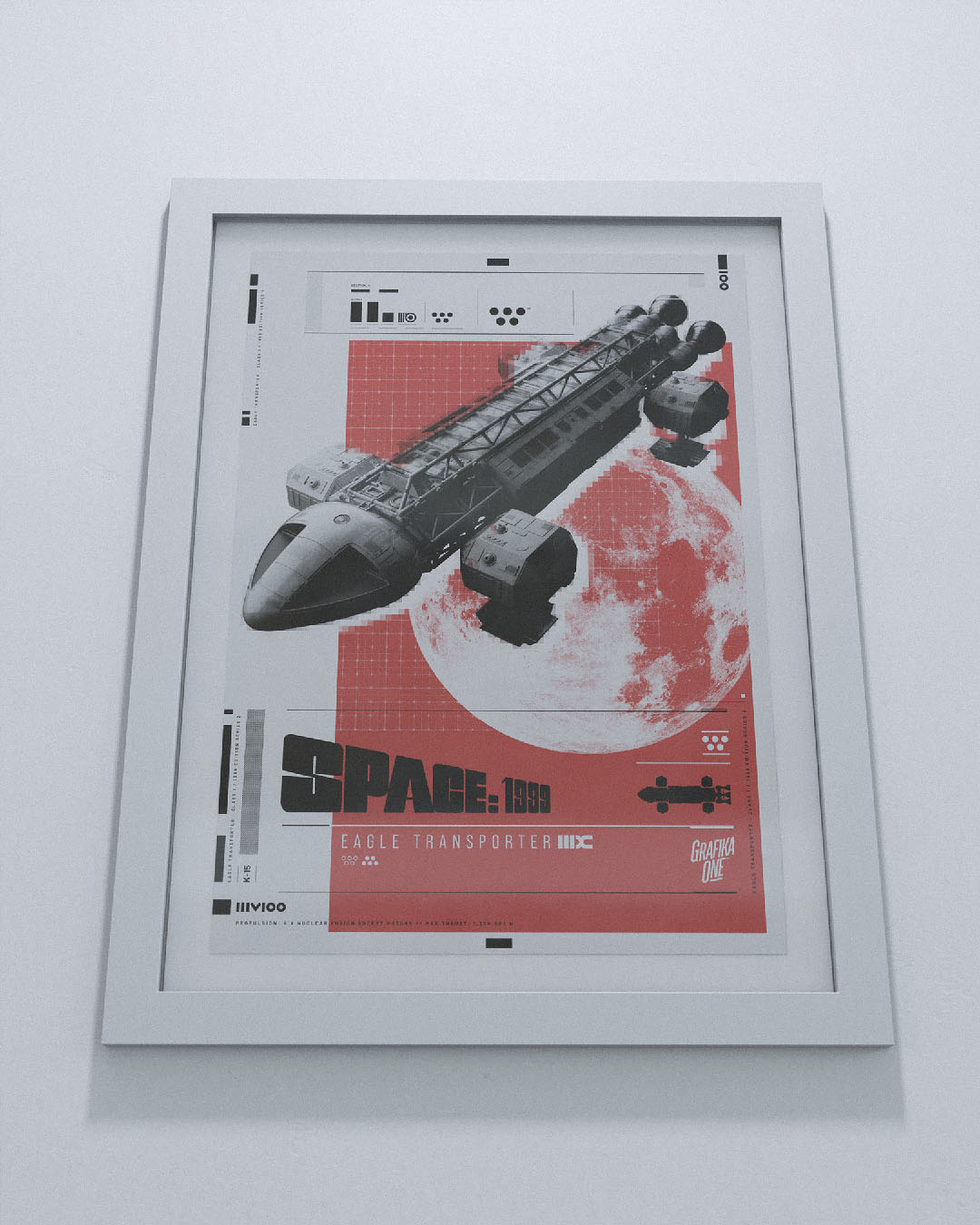
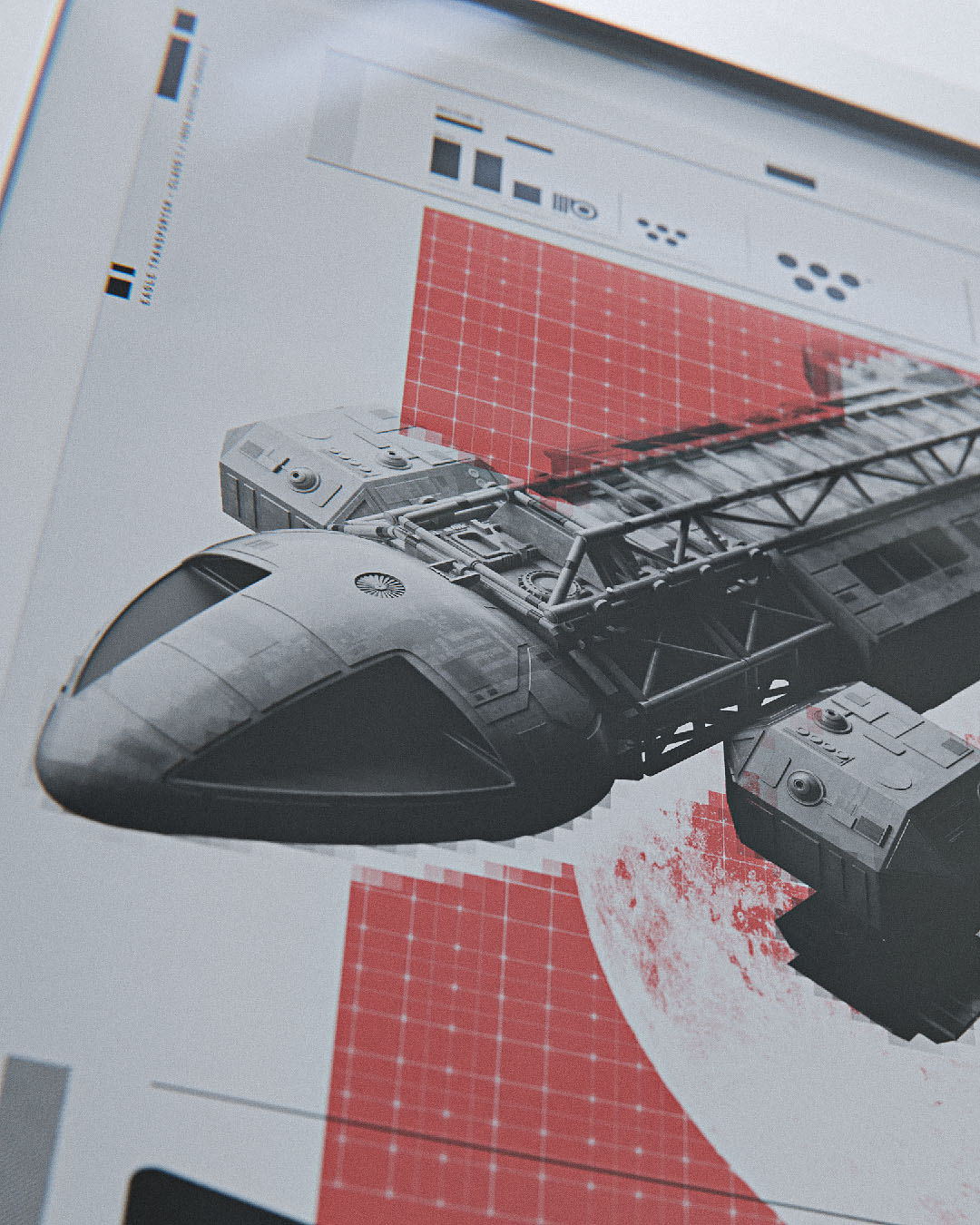
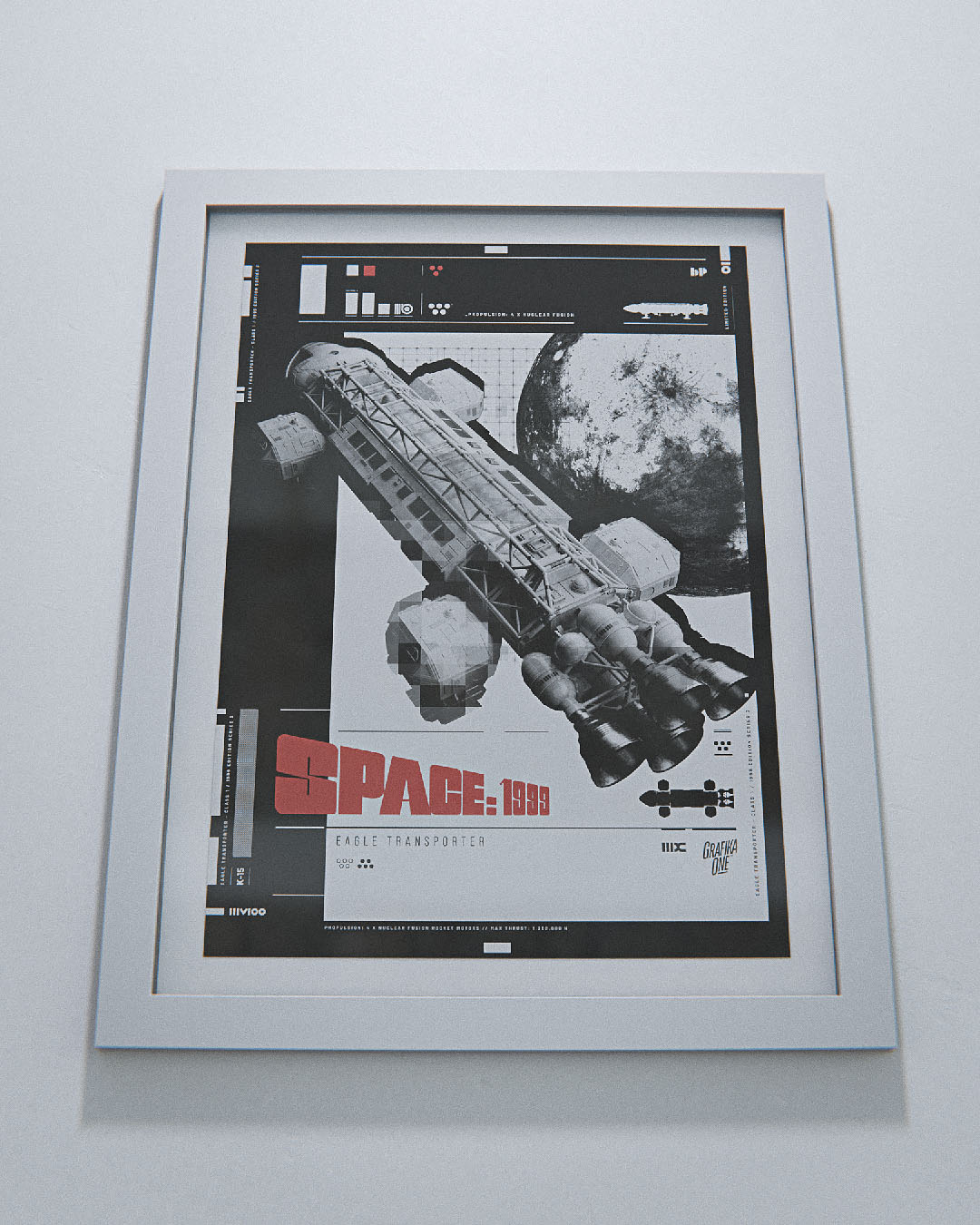
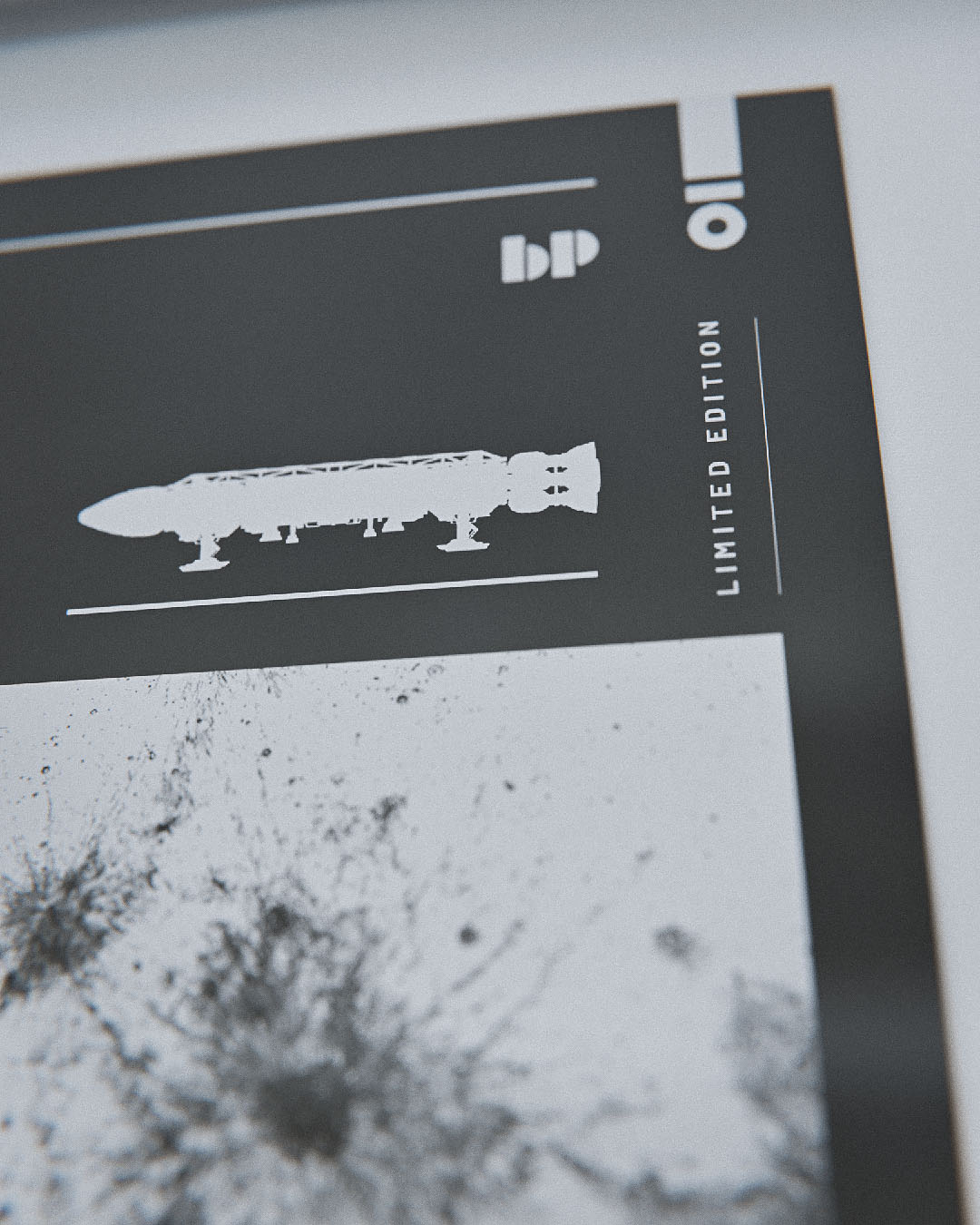
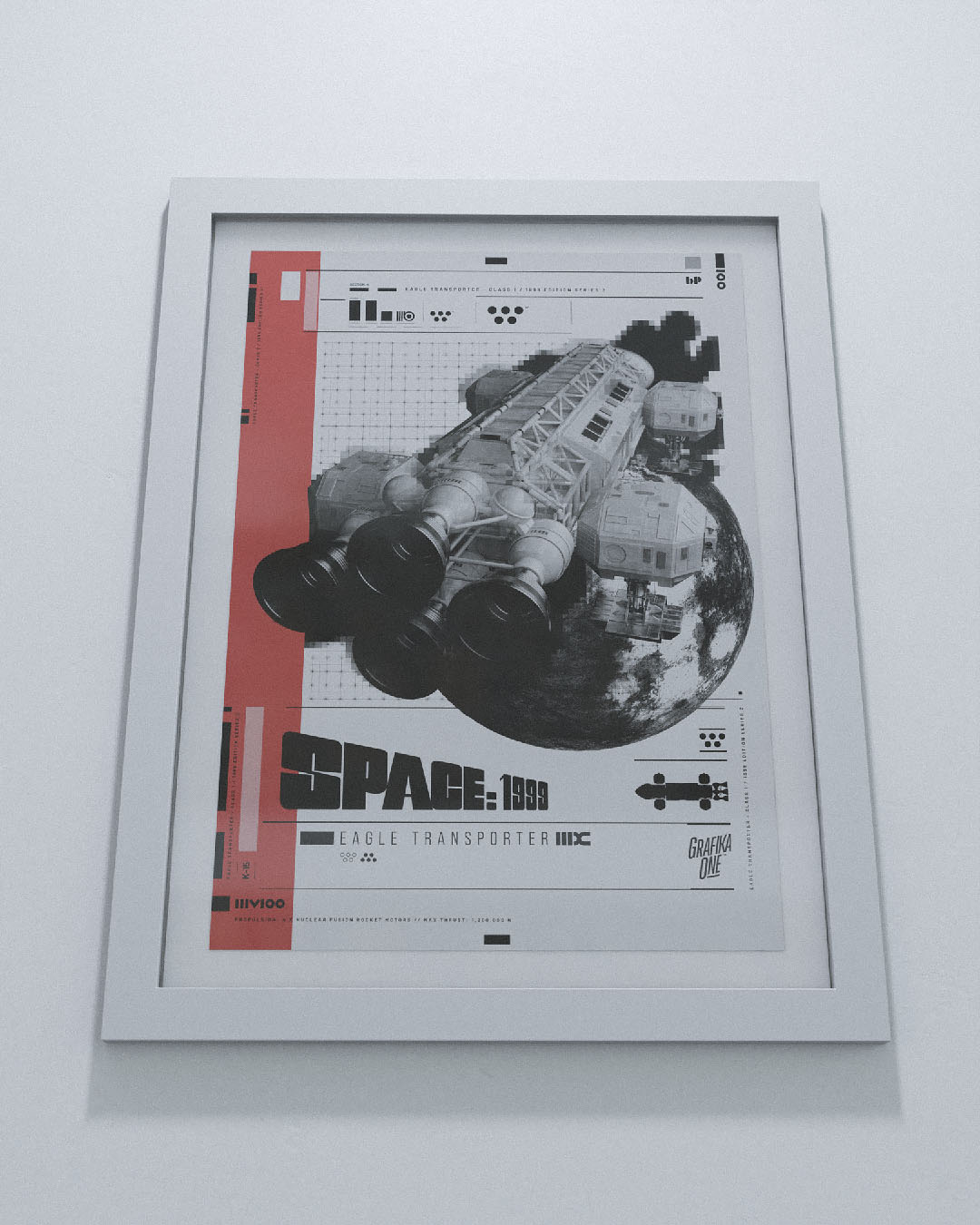
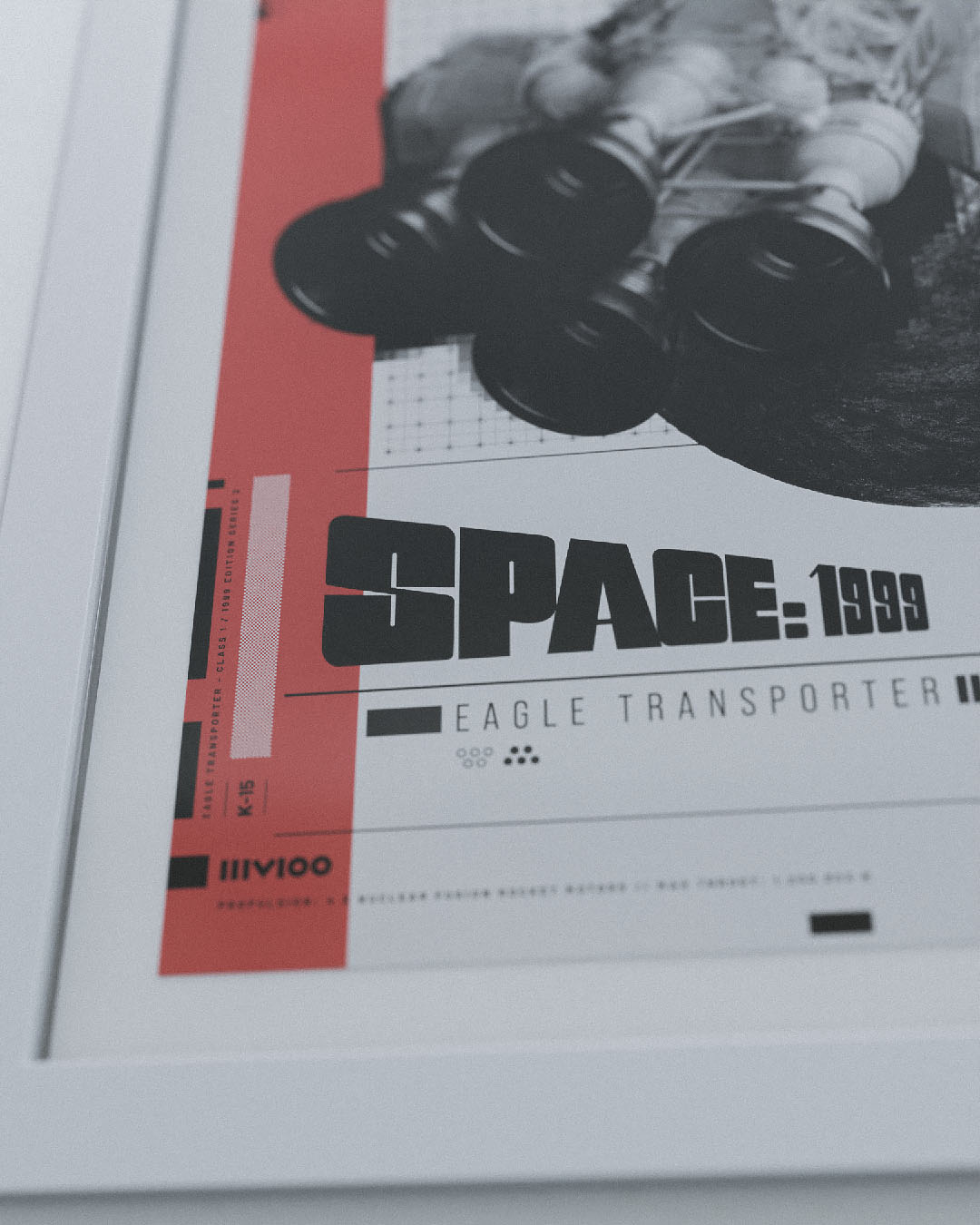
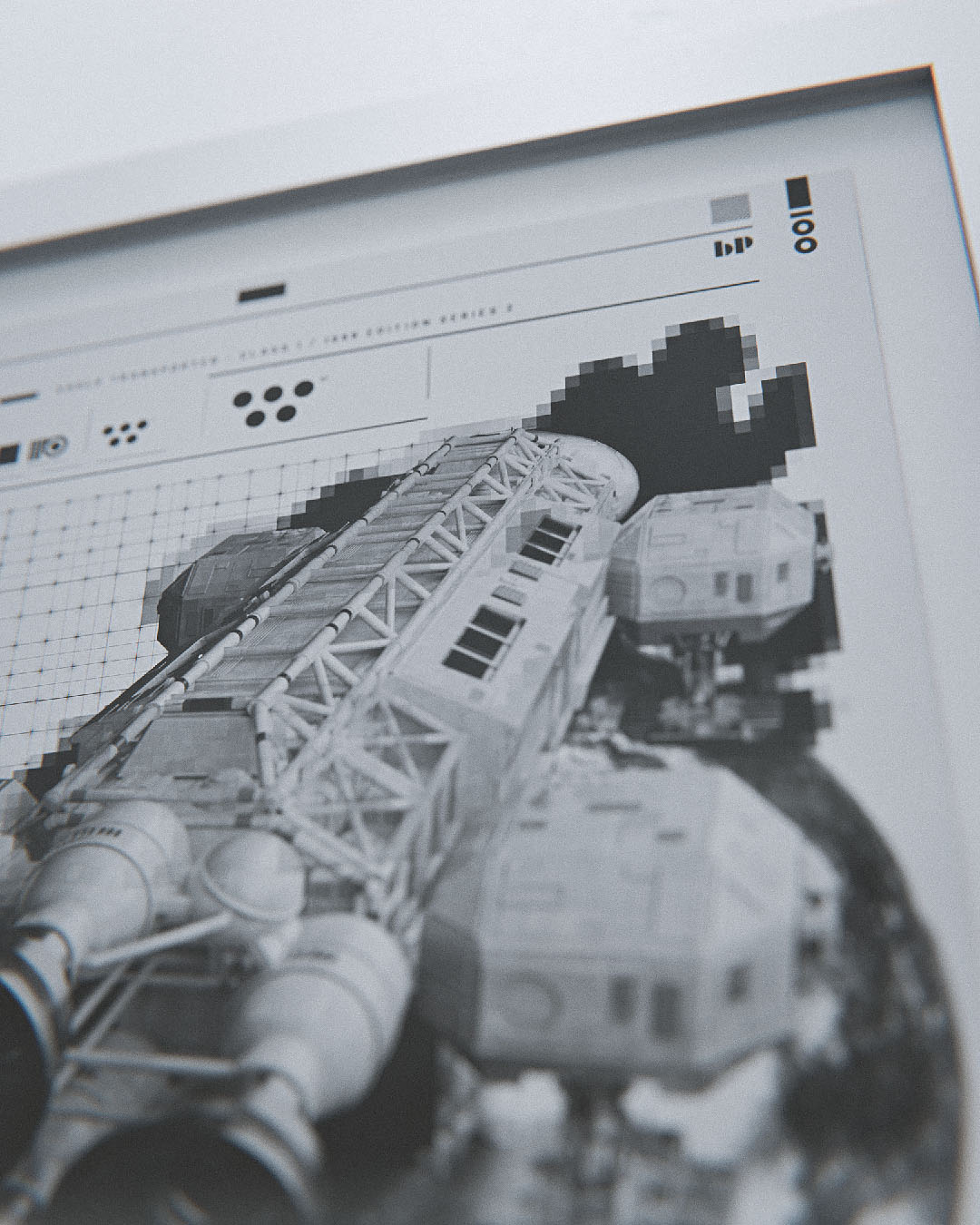
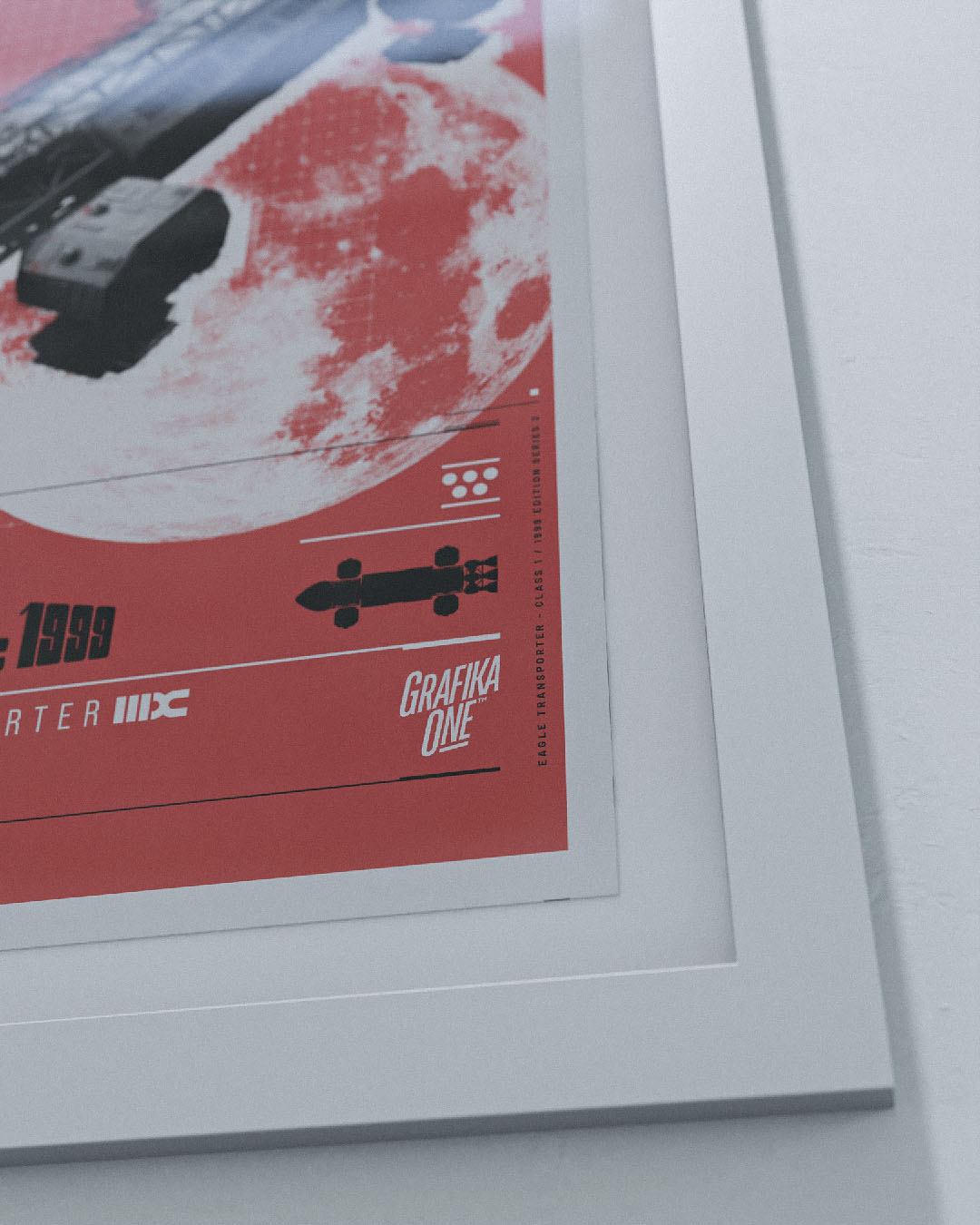
The technical 3D asset workflows are expanded here into a curated set of three interconnected graphic design studies, specifically developed to complement each other as a cohesive visual trilogy. This phase transitions the physical properties of the Eagle Transporter into structured, Swiss-inspired typographic grids, demonstrating how the craft’s harsh geometry translates across a unified editorial medium.
Influenced by technical spec sheets, sci-fi manual schemas, and vintage publication aesthetics, each composition features a distinct perspective of the vessel while utilizing a shared graphic vocabulary. By layering halftoned lunar textures, raw geometric masks, and functional data readouts across the three layouts, the series balances individual structural focus with a harmonious design that ties the collection together.