/ The Work of Designer - Baz Pringle
Concept
Graphic Design
3D Production

Concept
Graphic Design
3D Production
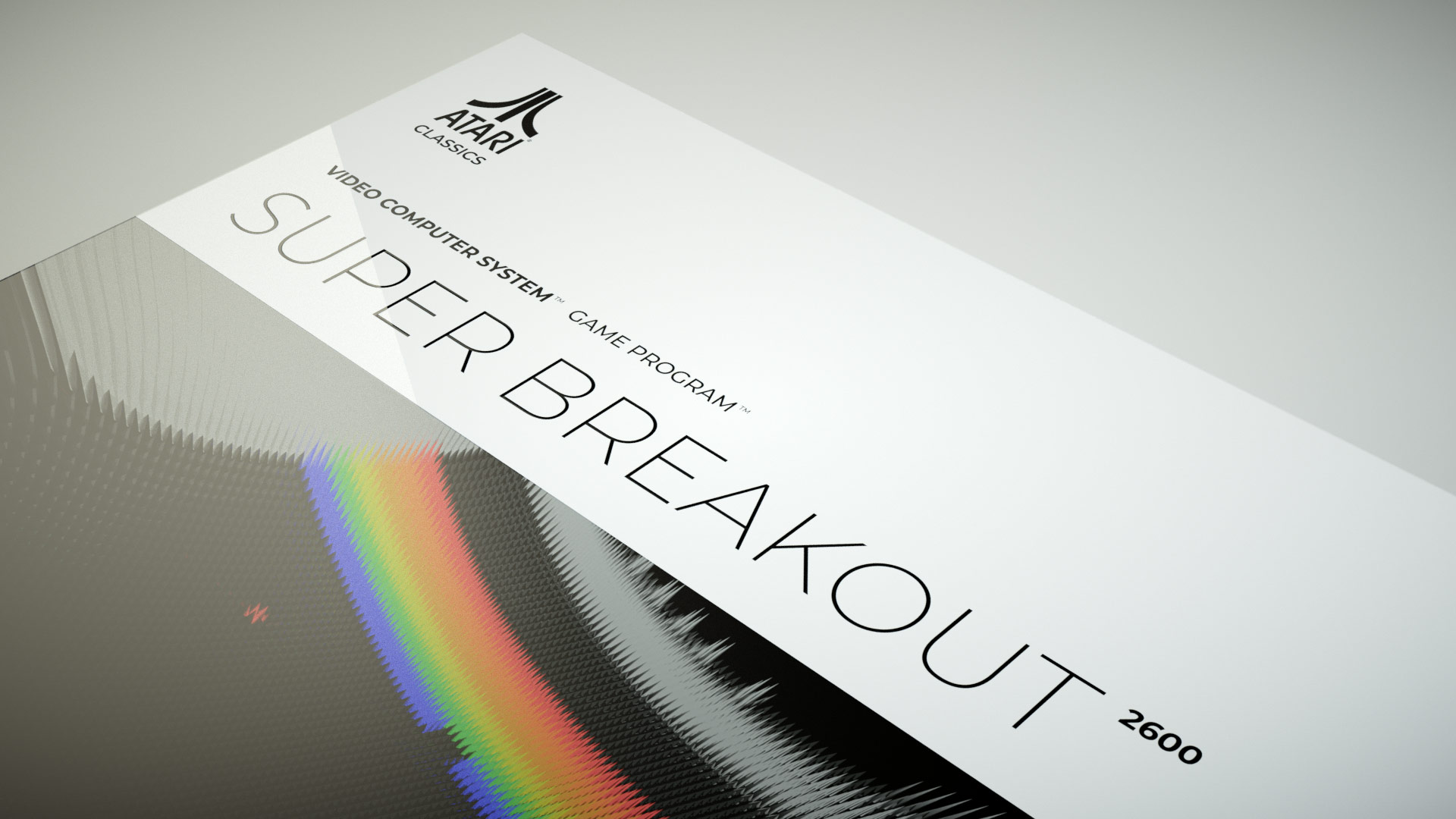
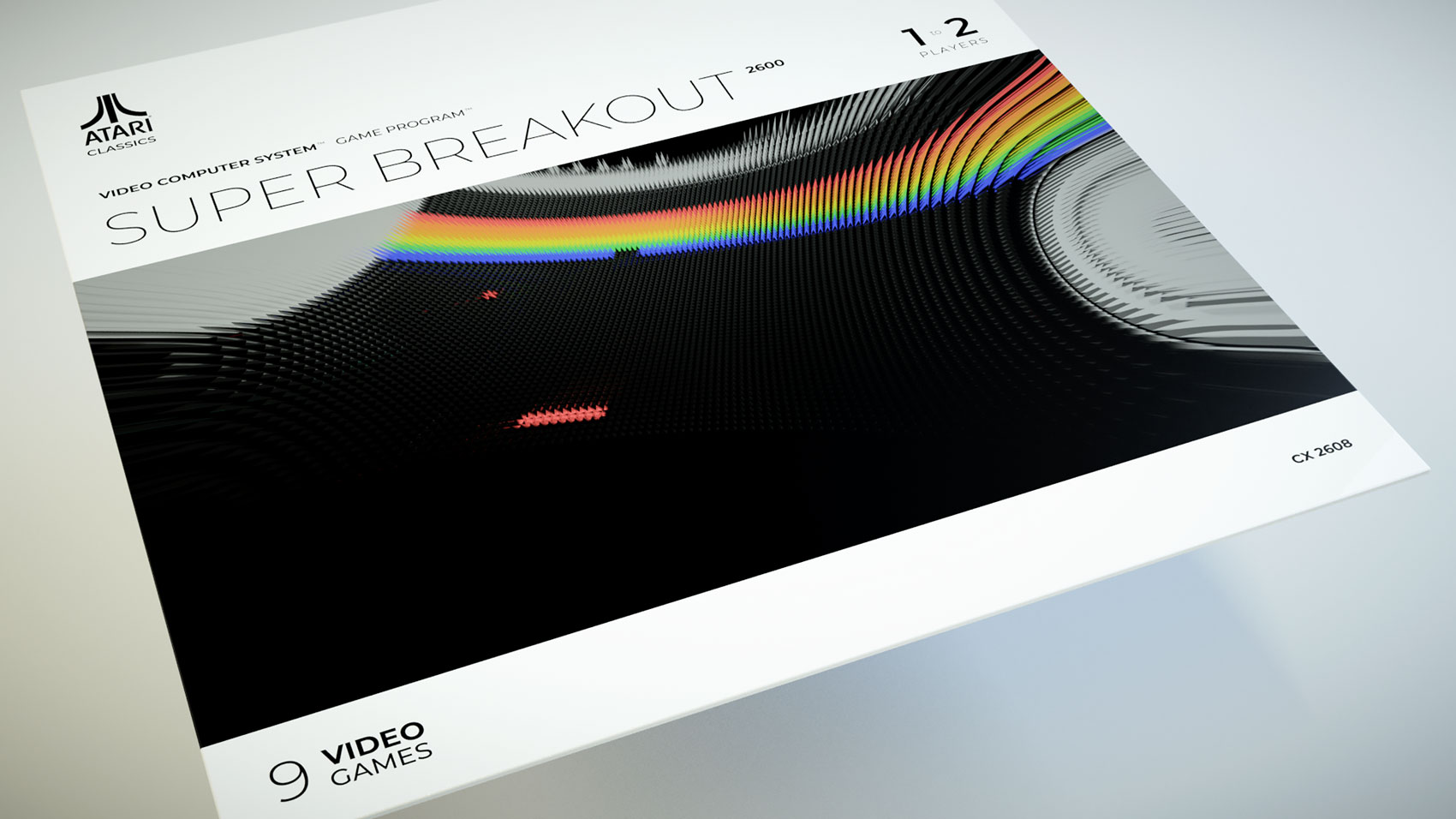
Super Breakout
Outlaw
Indy 500
Space Invaders
Pitfall
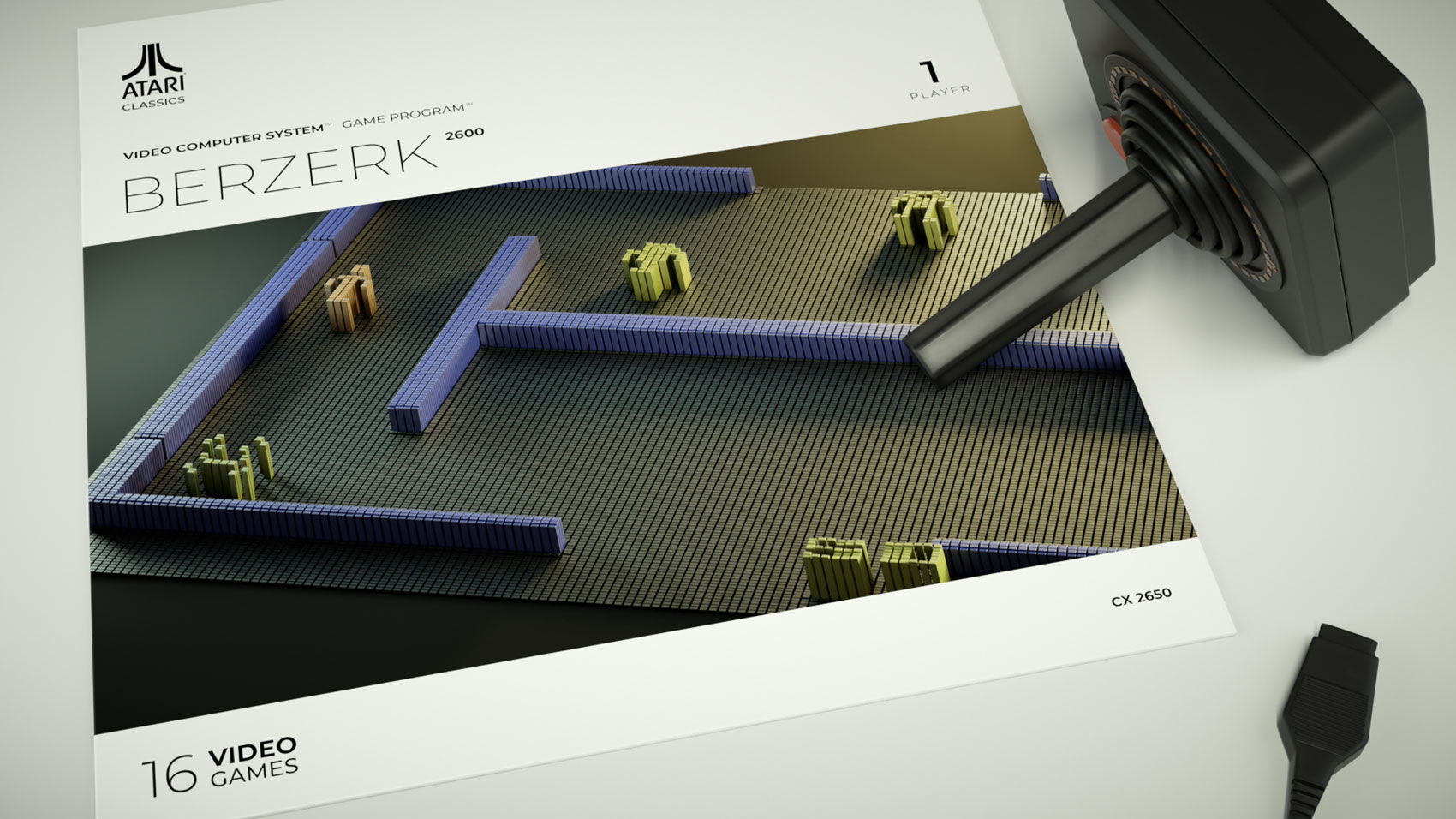
Berzerk
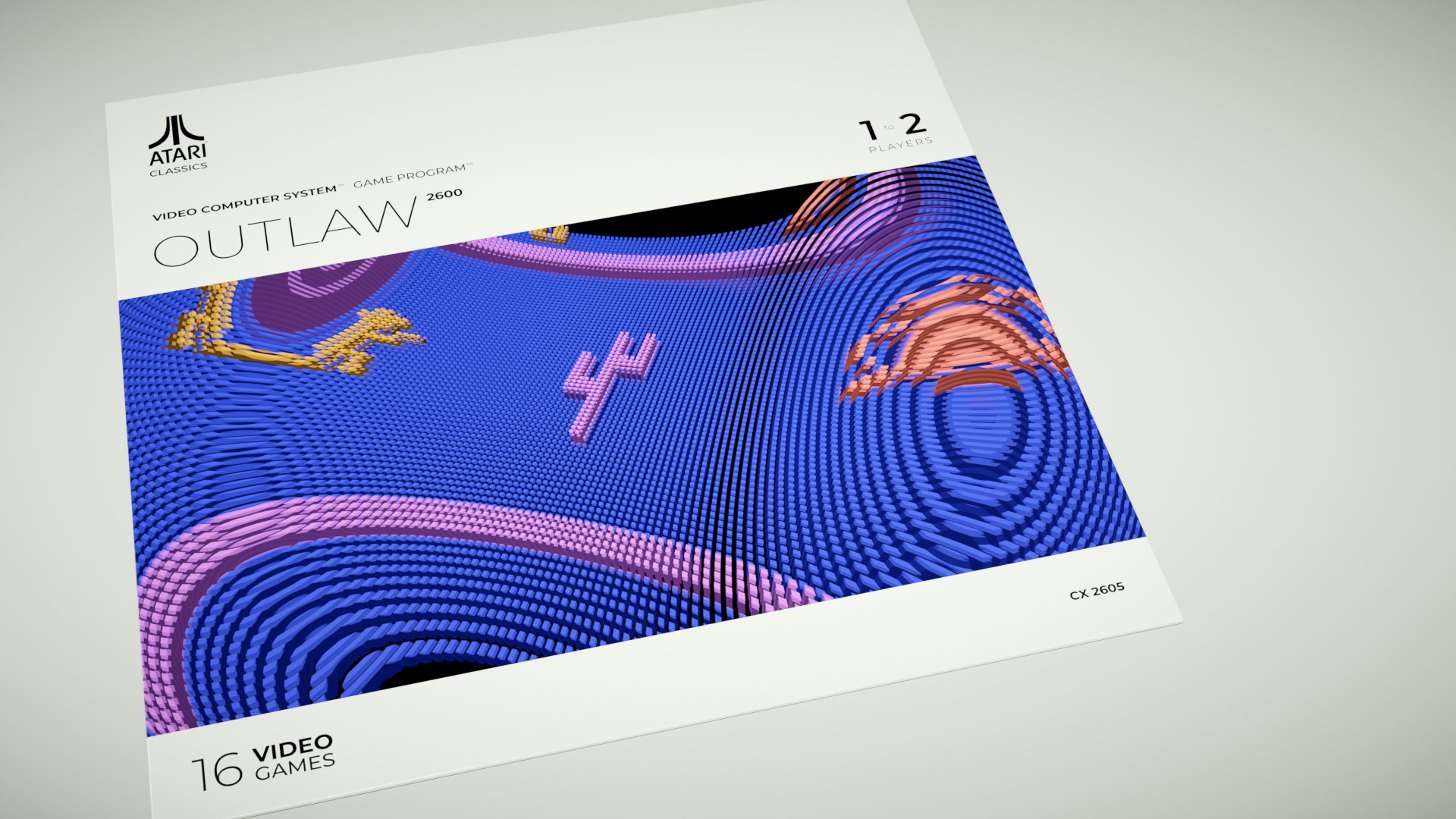
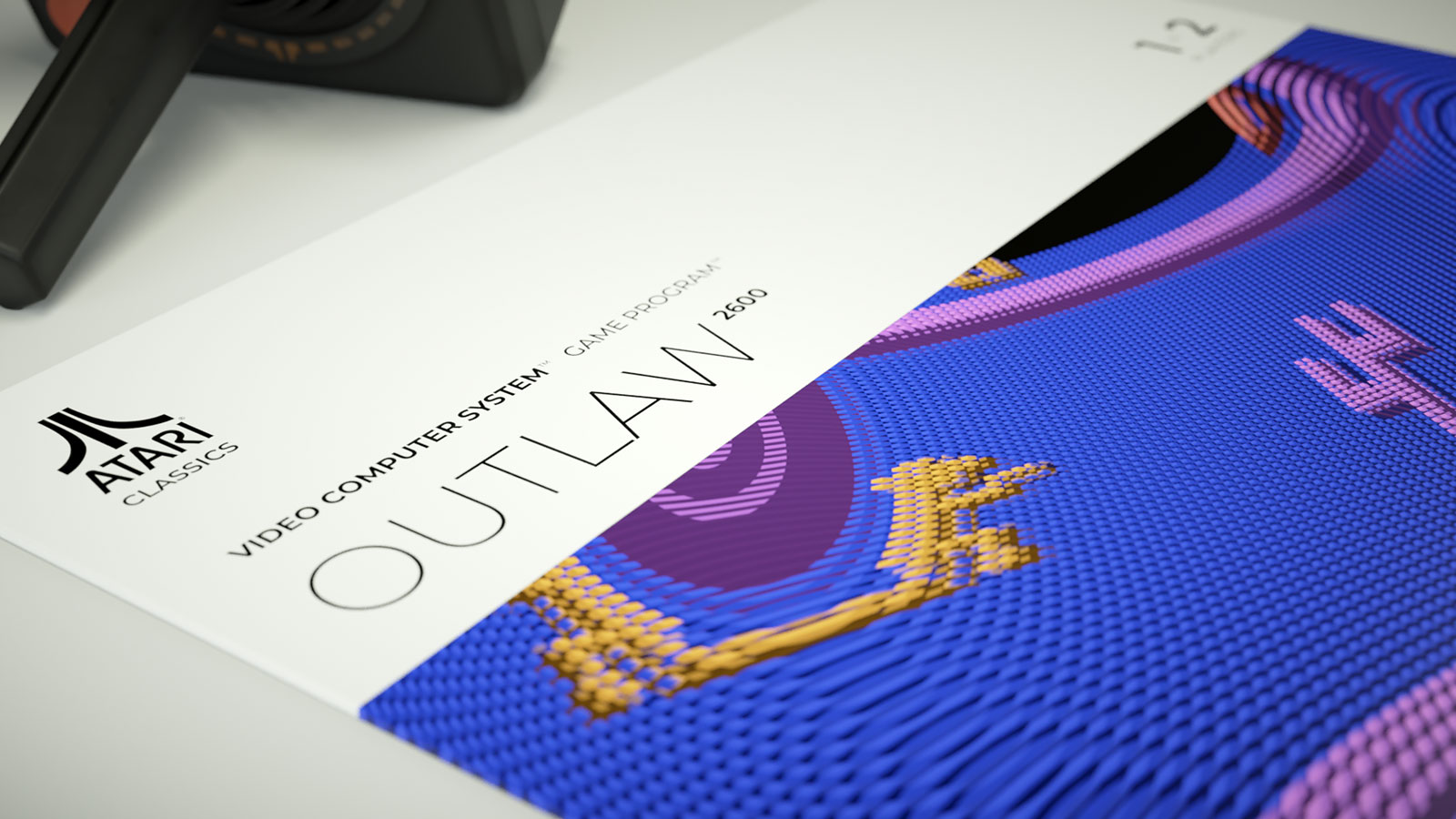
A conceptual graphic design and 3D look-development project reimagining the iconic packaging and box art of the definitive Atari 2600 Video Computer System. This collection spans several historic titles including Super Breakout, Outlaw, Indy 500, Space Invaders, Pitfall, and Berzerk—translating vintage physical cartridges and retail packaging into a contemporary, minimal design.
The workflow establishes a direct bridge between retro gameplay telemetry and modern design layouts. By extracting the core identity of each classic release, the project interprets early digital aesthetics in a way that feels new, while remaining fundamentally faithful to the underlying source material, brand typography guidelines, and historical cartridge catalogue systems.
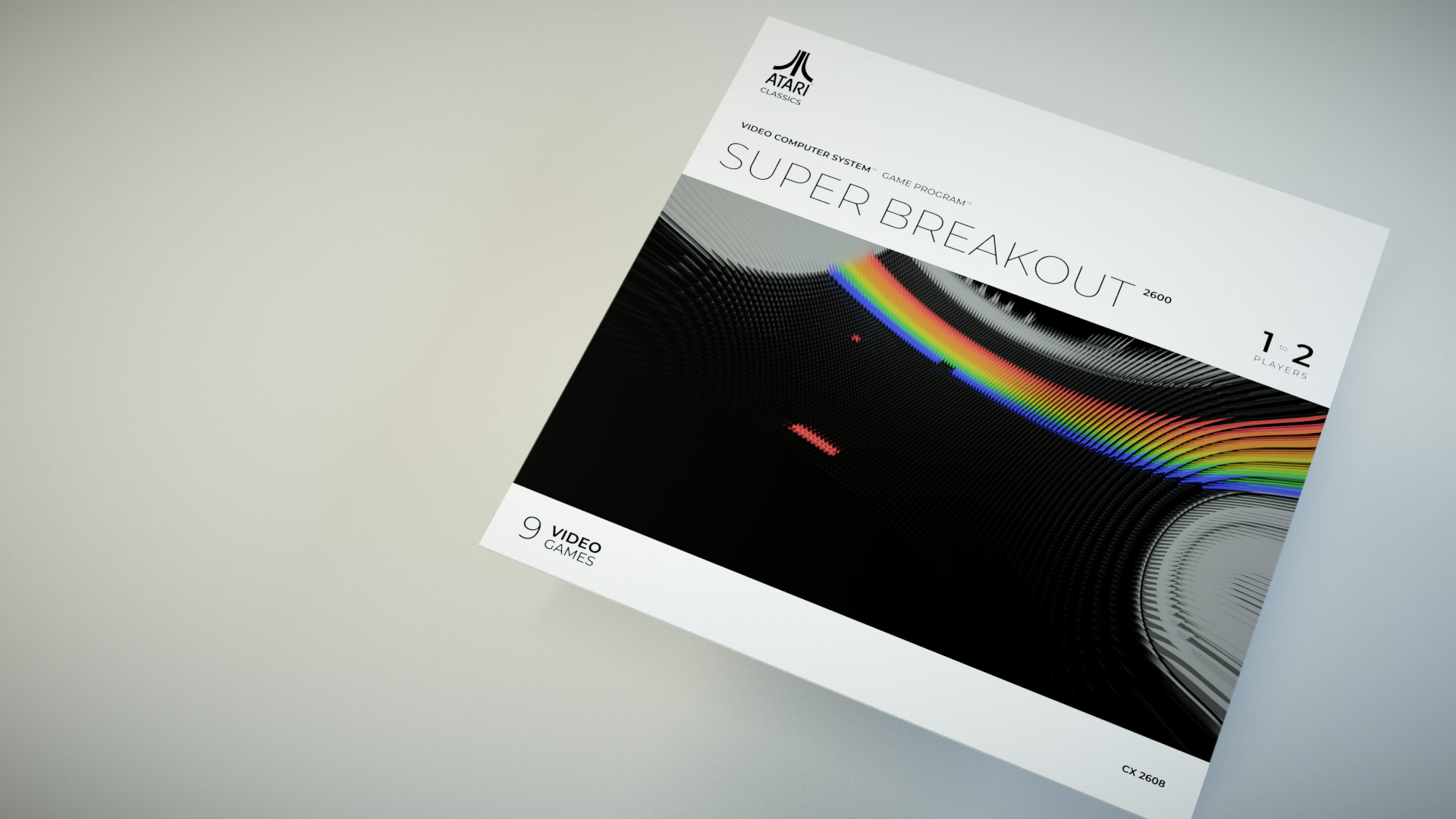
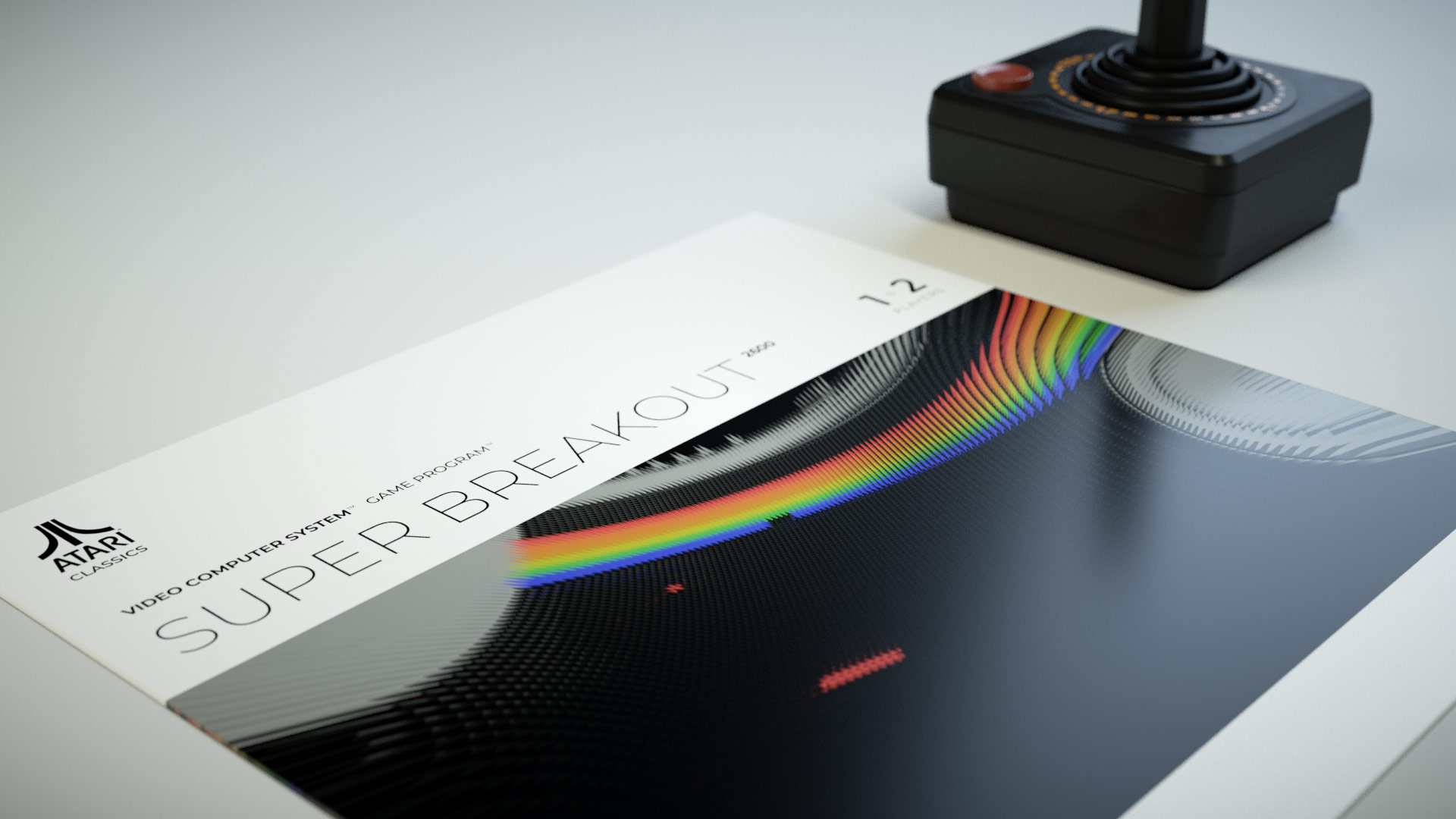
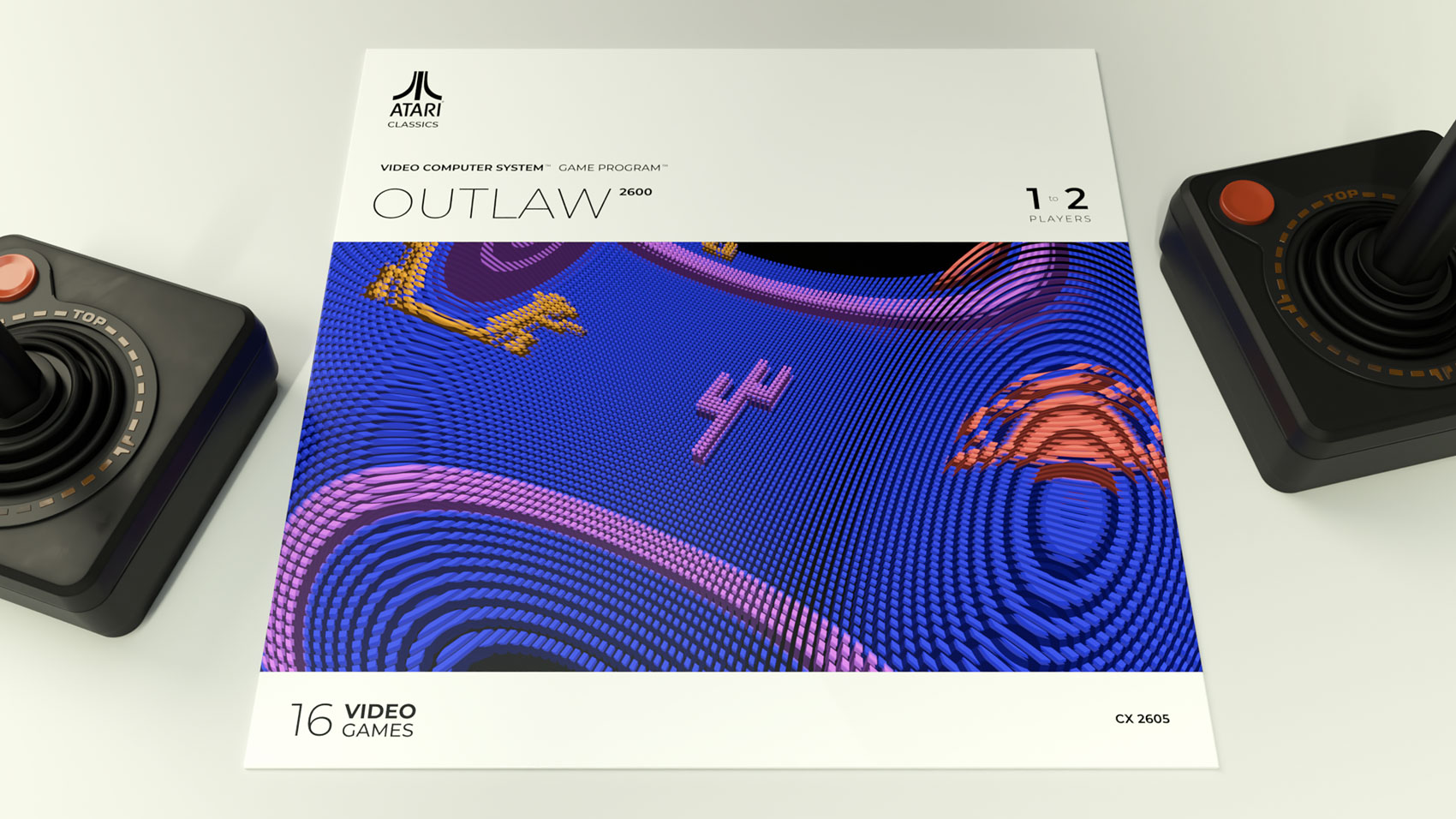
To establish an authentic physical context for the graphic layouts, the scene incorporates highly accurate, from-scratch 3D models of the definitive Atari 2600 CX40 joystick controllers. These hardware assets were originally modelled within Autodesk Maya for a separate project. They were subsequently migrated into Cinema 4D to serve as high-fidelity prop elements throughout this packaging series.
Once imported into Cinema 4D , the controller geometry was optimised and adjusted specifically to leverage the strengths of the Octane rendering engine. The look-development phase involved translating the distinct tactile qualities of the vintage physical hardware into accurate digital materials. Custom shaders were engineered to replicate the subtle surface grain of the injection-moulded plastic base, the flexible matte texture of the rubber joystick boot, and the iconic orange finish of the primary action button.
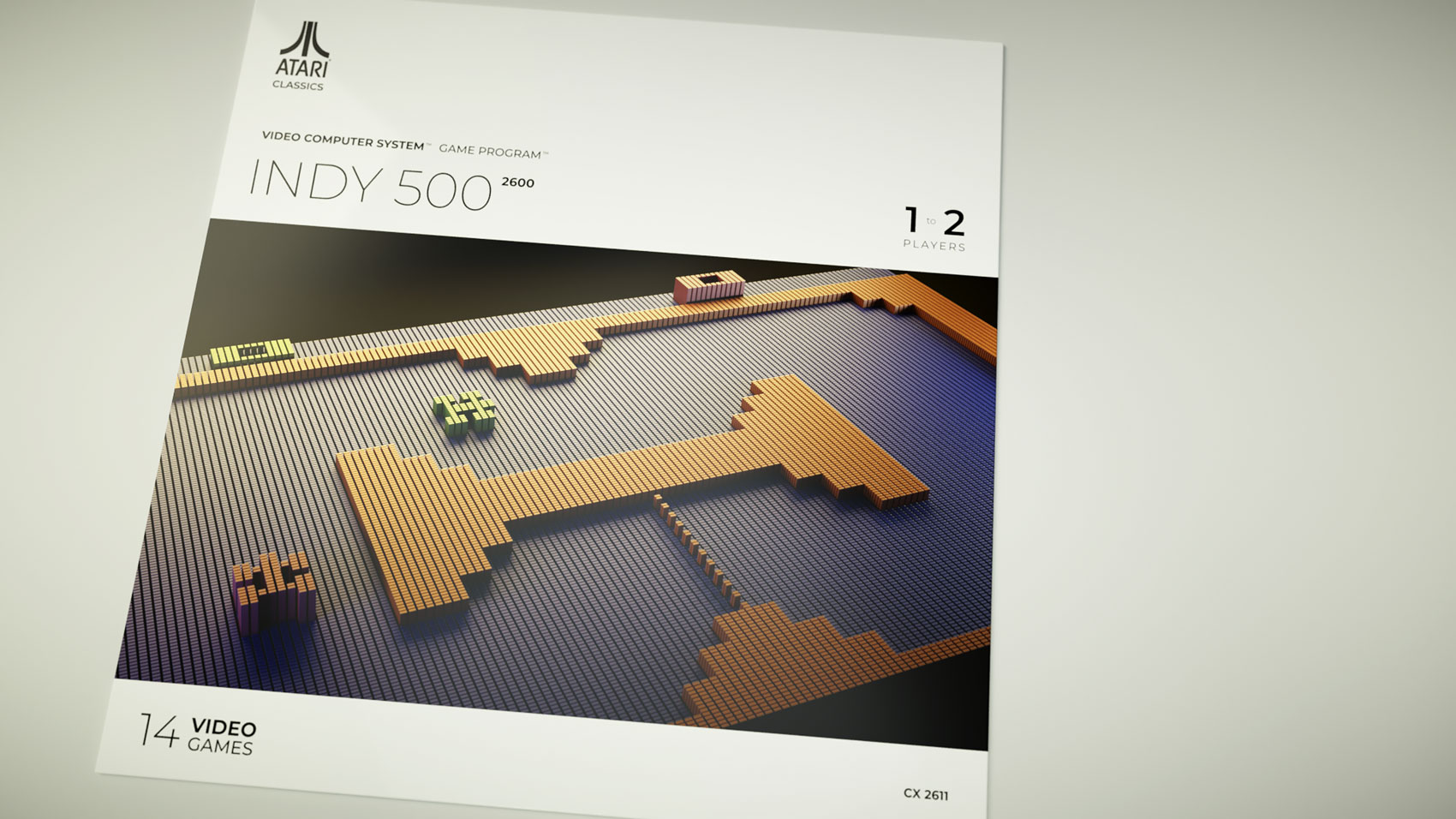
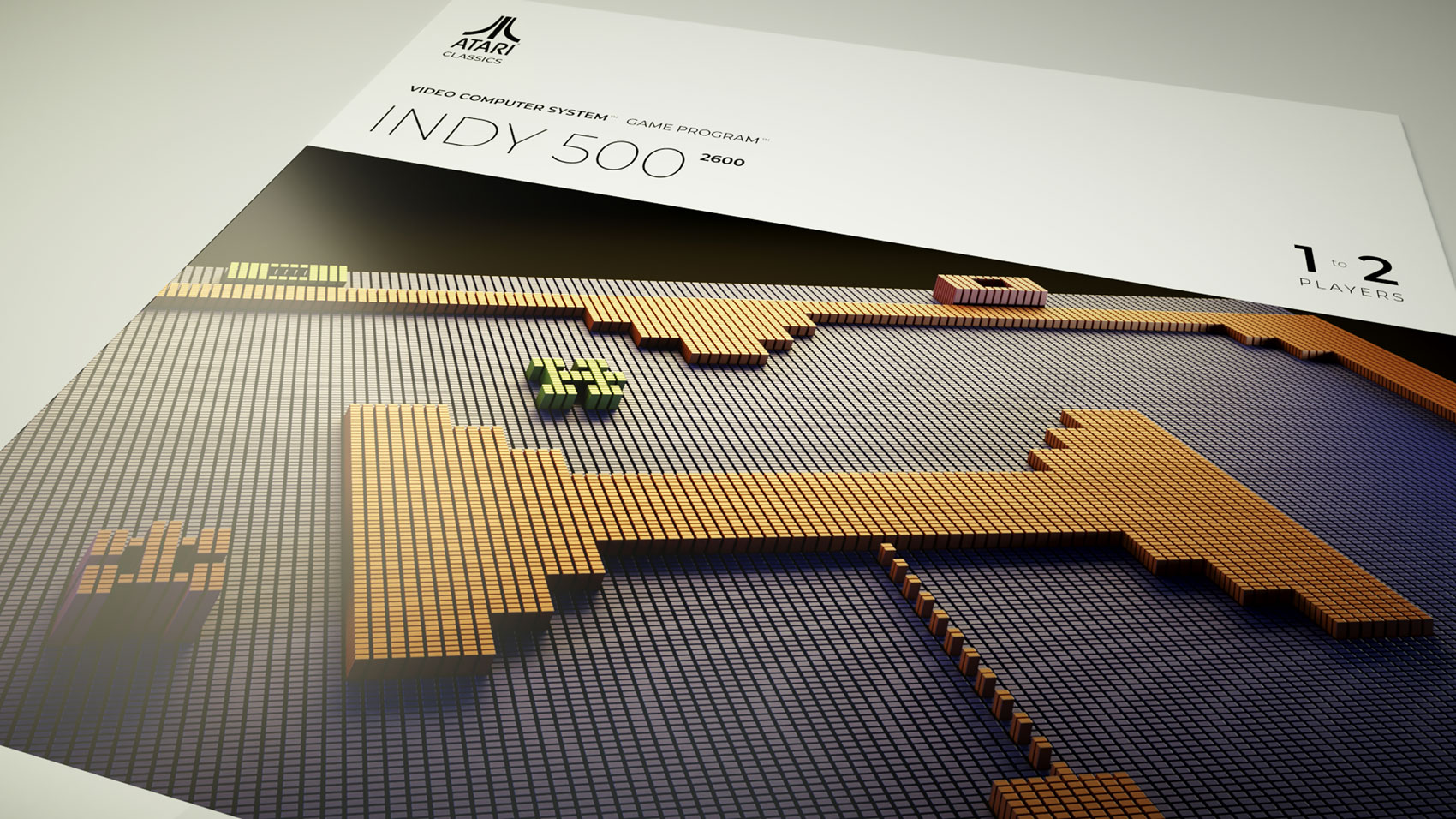
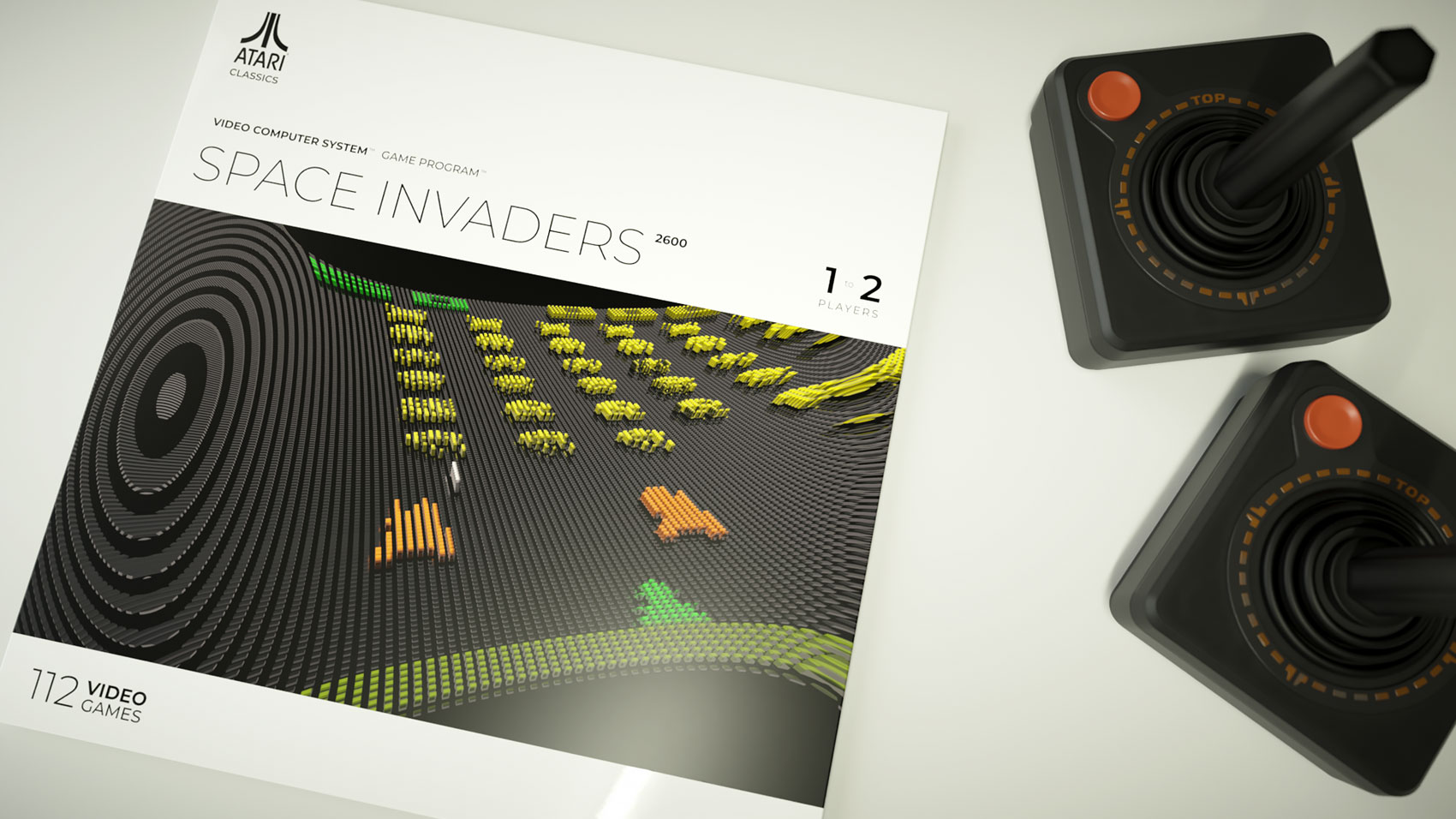
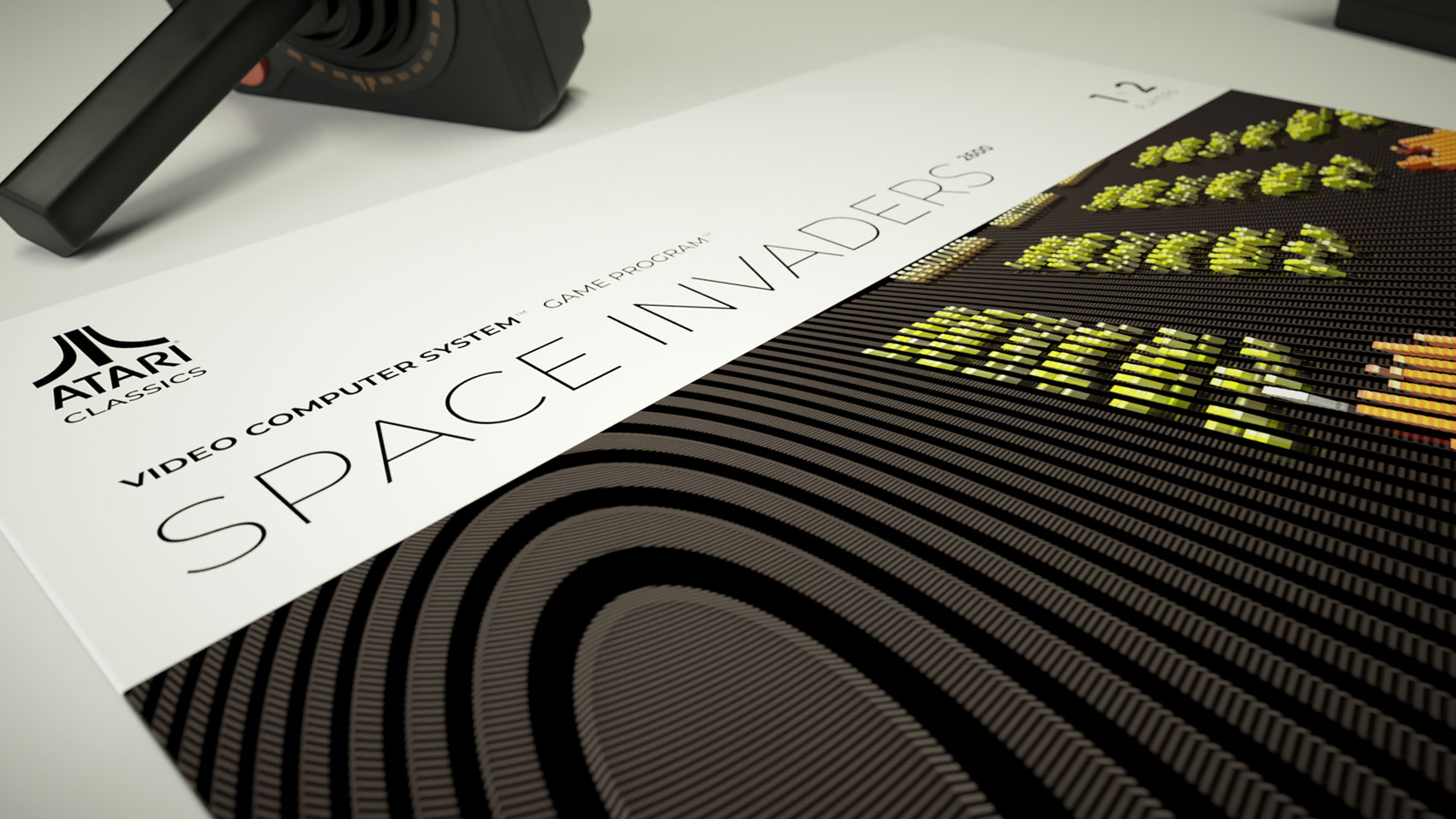
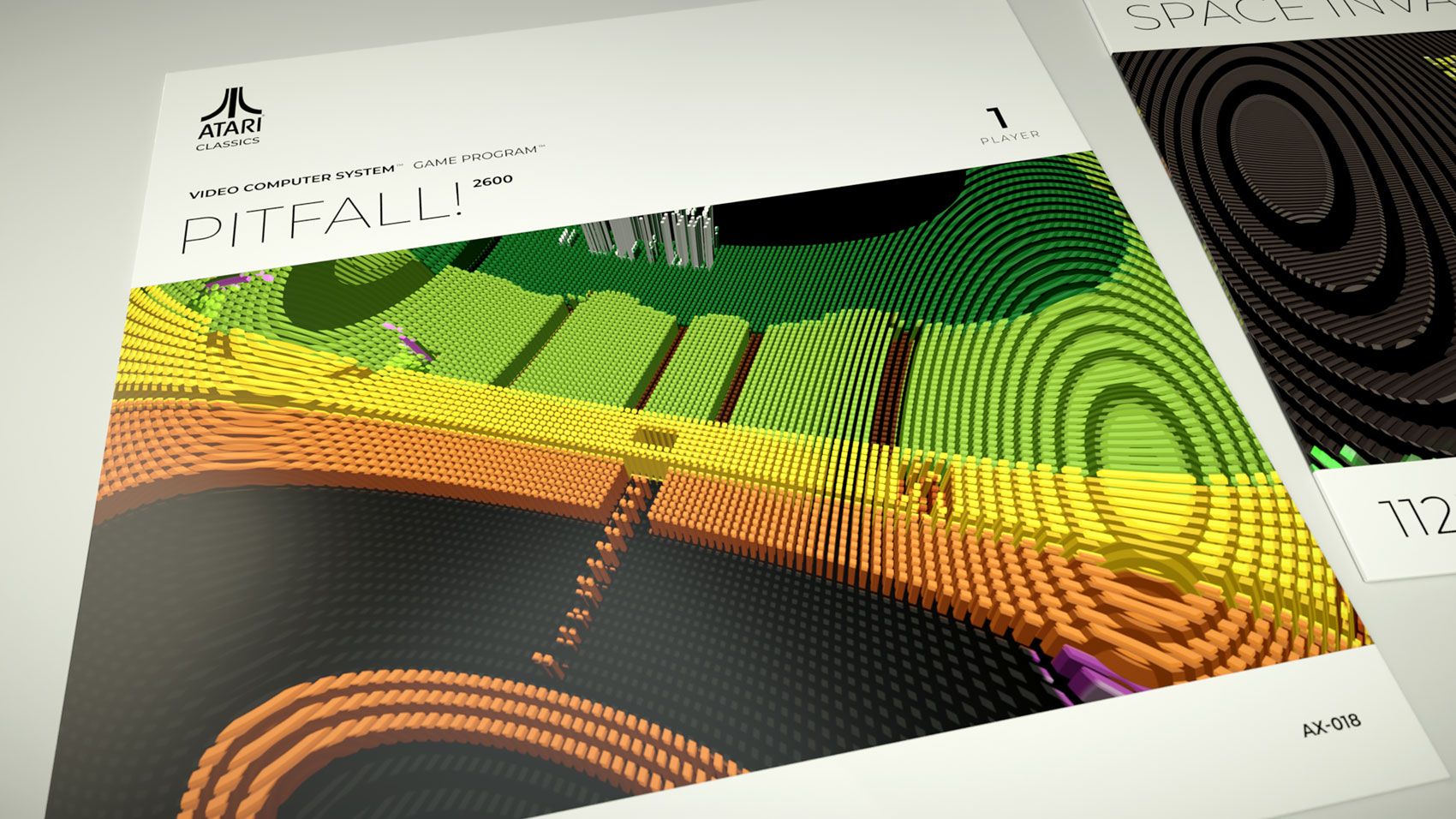
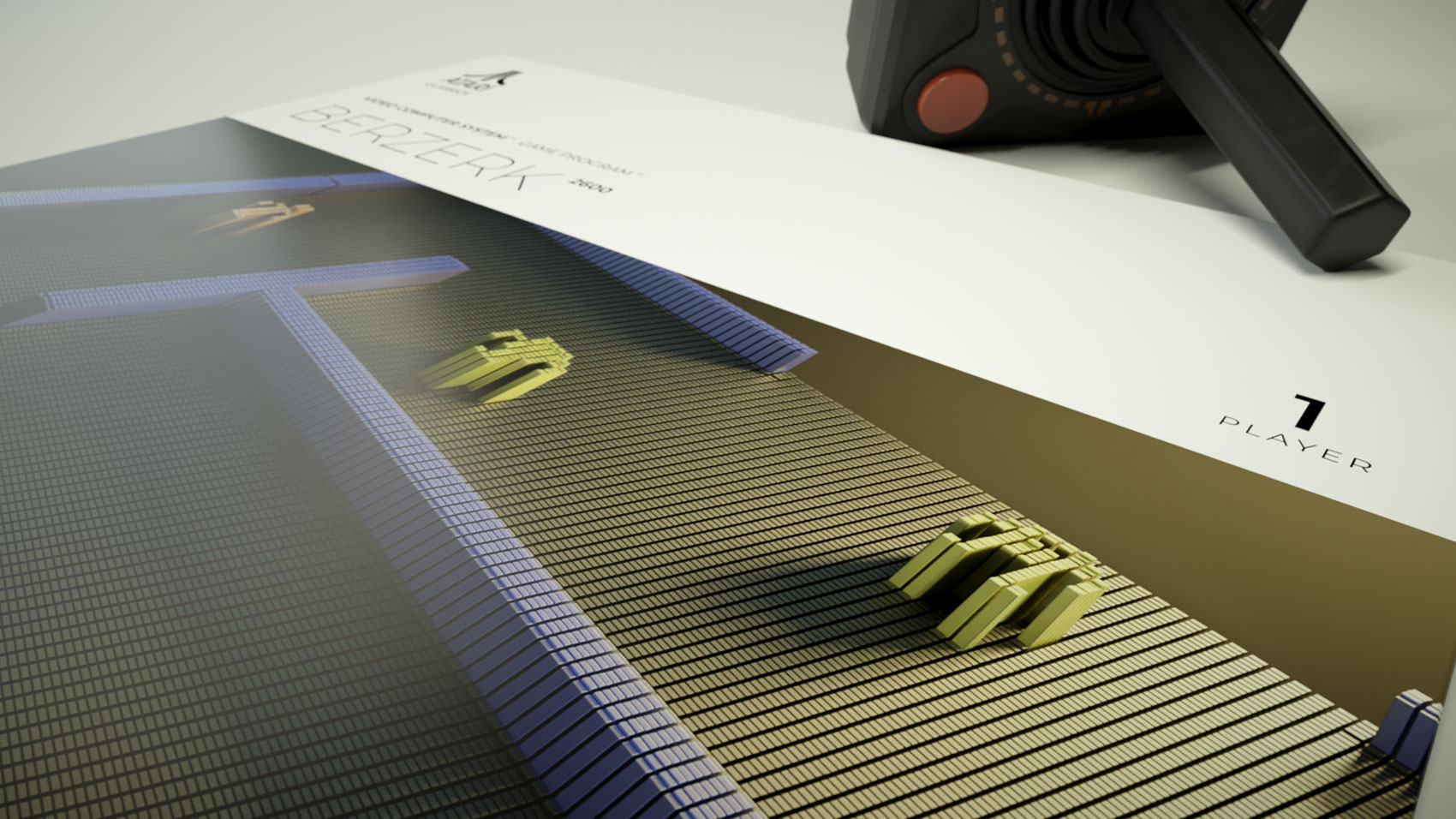
The core technical challenge of this series relies on translating real, captured Atari 2600 gameplay footage directly into dynamic motion graphics. Real game sessions were recorded and imported into Cinema 4D, where the raw video files were used as data maps to drive a complex cloning system. The software used the luminosity and colour data from each frame, translating the two-dimensional pixel stream into a structural grid of thousands of individual 3D blocks.
This animation framework allows the classic titles to be experienced through physical movement rather than static imagery. The brightness values of the game footage modulate the vertical scale of the geometry in real time, causing the traditional flat sprites to rise from the floor as a 3D relief landscape.
The final showreel at the base of the project page demonstrates this displacement pipeline using active footage from Berzerk, where the maze walls, players, and enemy robots dynamically shift, extrude, and animate across the structural grid based entirely on the underlying source video data.